
Humankind 2 Earth Starting Locations & First Tales Guide
Earth starting locations in Humankind 2 Historical Mode: 20 First Tale pins, Wild Twins and Flood Tamer traits, Nile Turn 1 spawns, cradle comparison table.
Frequently Asked Questions
How many starting locations are on the Humankind 2 Earth map?
What is the difference between Wild Twins and Flood Tamer First Tales?
Do Earth map starts lock you into real-world history?
Which menu path opens the Earth map in Humankind 2?
Can beginners safely start on the Nile Flood Tamer tale?
How Do You Open Historical Mode and the Earth Starting Map?
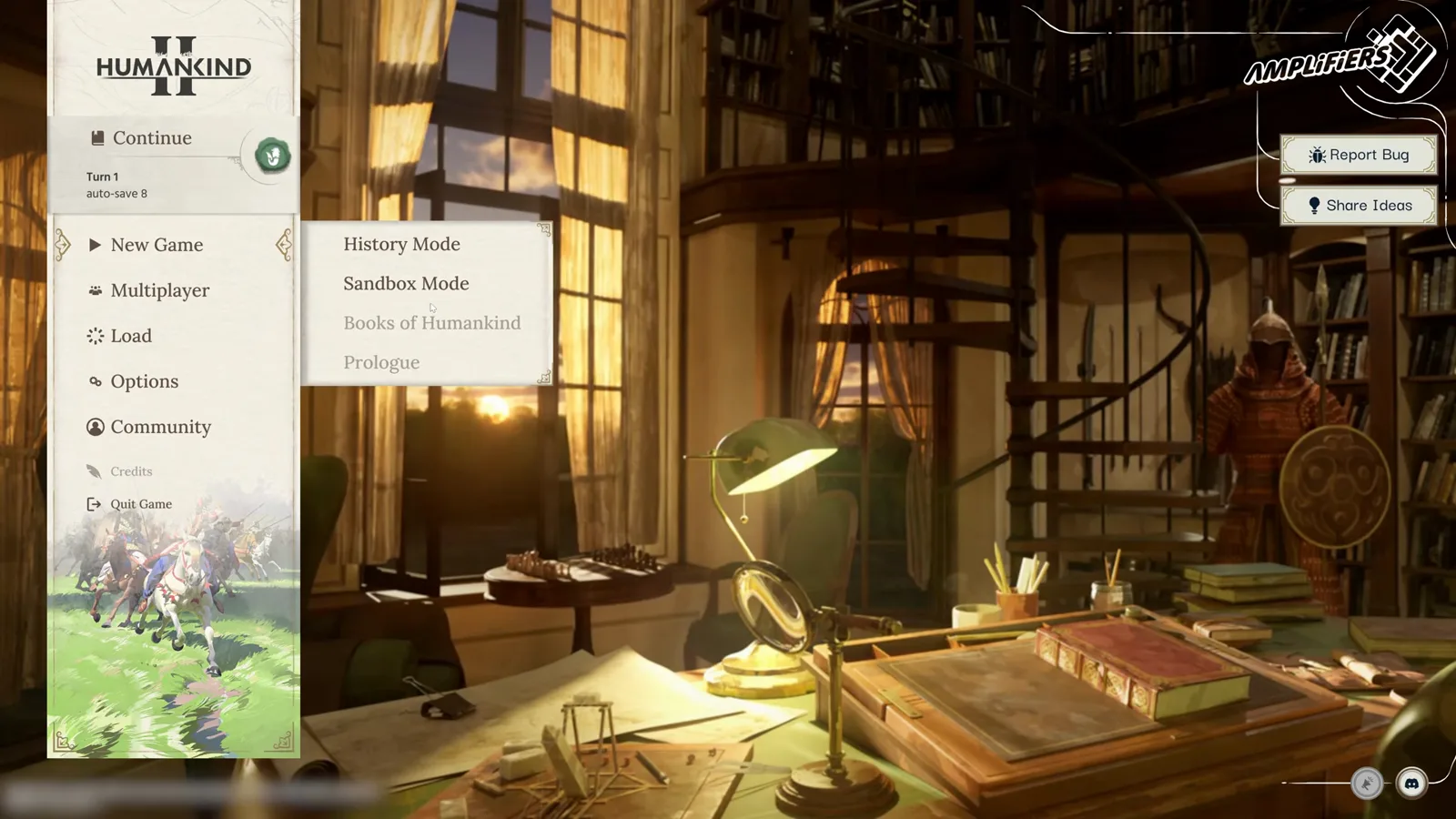
Humankind 2 splits its single-player campaign entry between Sandbox Mode (procedural continents) and Historical Mode (a fixed real-world Earth map researched with academic historians). If you want geography that matches textbooks—not a randomized island chain—you start in History Mode from the main menu, then land on the First Tale selection globe where every pin is a curated cradle of civilization.
The official First Gameplay Overview (O4ZTZafqFOw, October 15, 2026) is the best verified source for this flow. Our companion Historical Mode & First Tales mechanics page explains how those myths connect to culture evolution later; this guide focuses on where you can start, what traits you inherit, and how Turn 1 looks on the Nile demo path.
- 01
Open the main menu mode sub-menu and select History Mode
From the scholar’s study UI, expand the mode list. History Mode sits alongside Sandbox Mode, Books of Humankind, and Prologue. Choosing History Mode is the gateway to the authentic Earth map rather than a generated world seed.
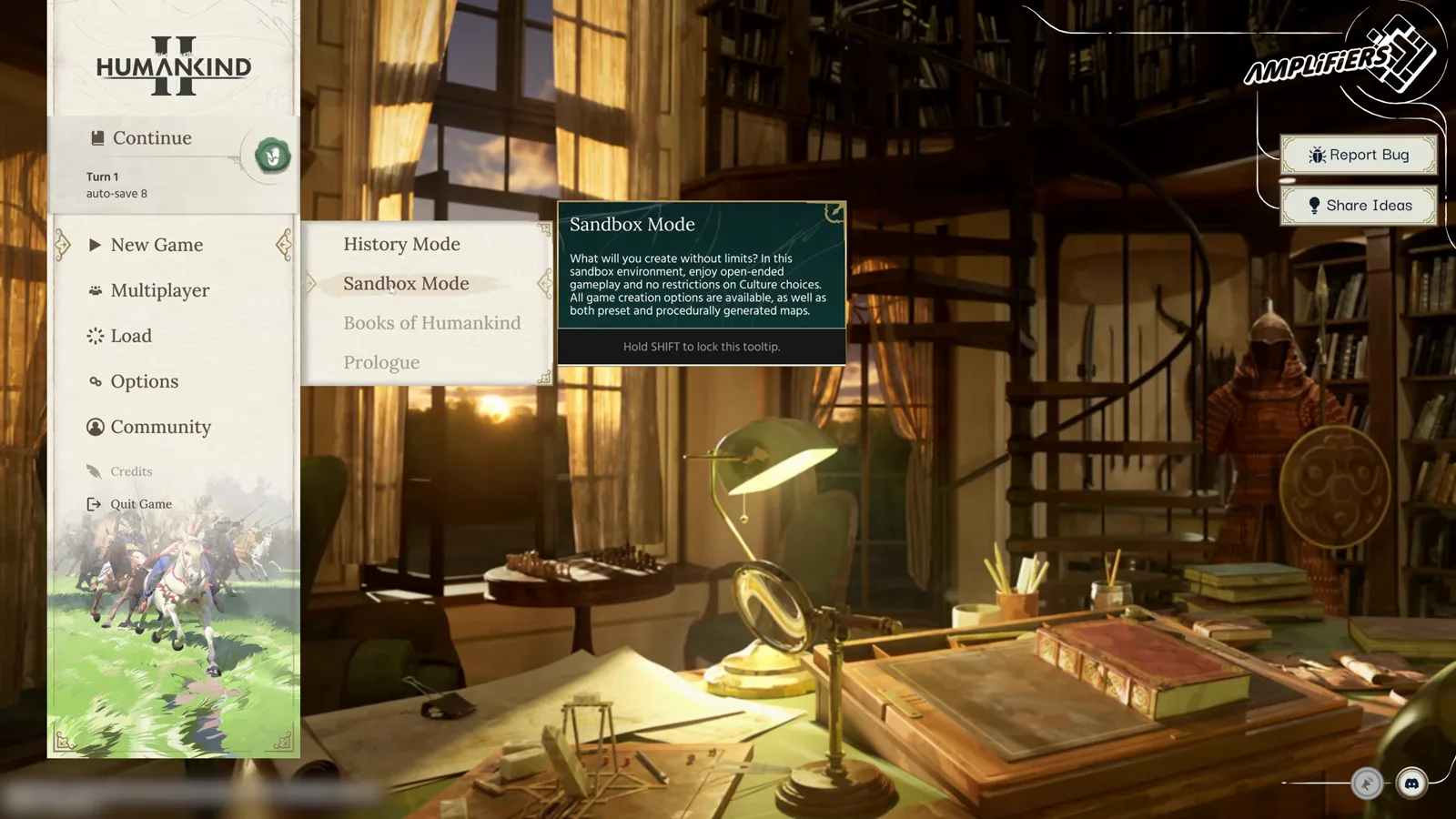
Frame verified at 1:38 — the four campaign entry points before the Earth globe appears. Watch at 1:38 ↗ - 02
Pan the First Tale globe and review roughly twenty regional pins
The next screen is a parchment-style real Earth map with regional markers across North Africa, Europe, the Near East, Asia, Greenland, and the Americas. The right panel titles the featured myth “MORE THAN A MYTH” while you compare cradles before committing.
At 1:45 the UI shows the full spread of authentic starting cradles—not a procedural shuffle. Watch at 1:45 ↗ - 03
Inspect Wild Twins on the Italian Peninsula and read its three tribe traits
Selecting the Italian Peninsula pin opens the Wild Twins First Tale. Your opening tribe inherits State of Nature (units cannot be produced with normal Settlement production), Feral Rage (+5 Strength on all units when changing to another culture), and Resilient Nature (+10% Authority on Authoritarianism rules on settlements).
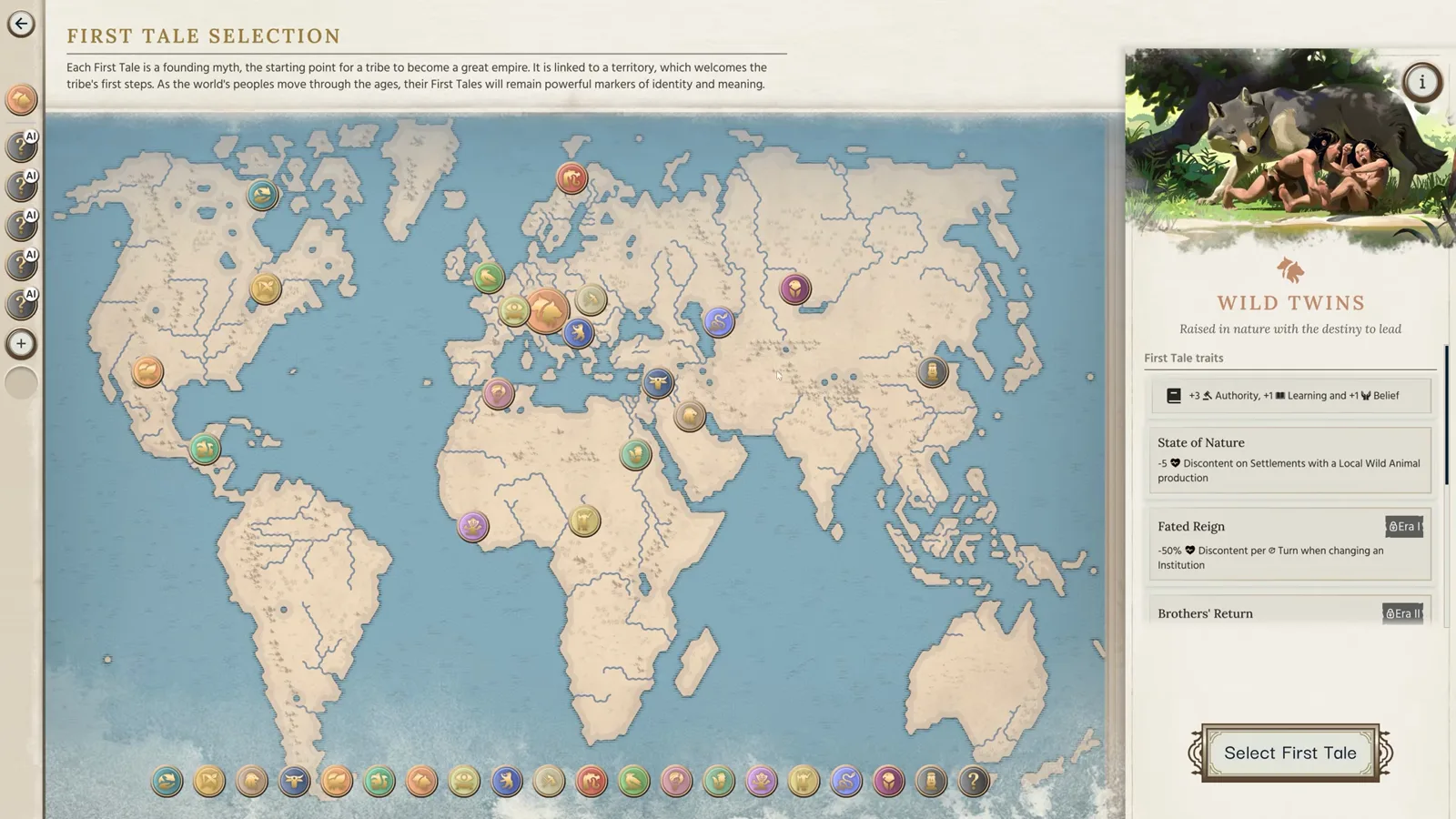
Wild Twins at 1:53 — wolf-myth flavor with aggressive military and authority skews. Watch at 1:53 ↗ - 04
Compare Flood Tamer on the Nile Delta and confirm Ancient Egypt’s tale
The Nile River Delta pin launches Flood Tamer for Ancient Egypt. Traits shown are Abundant Waters (+2 Food from River or Water tiles), Frontier Districts (-25% Industry cost for new districts), and Source of Strength (+5 Strength to units in settlements with a positive food surplus). Confirm to lock the myth and map slice.
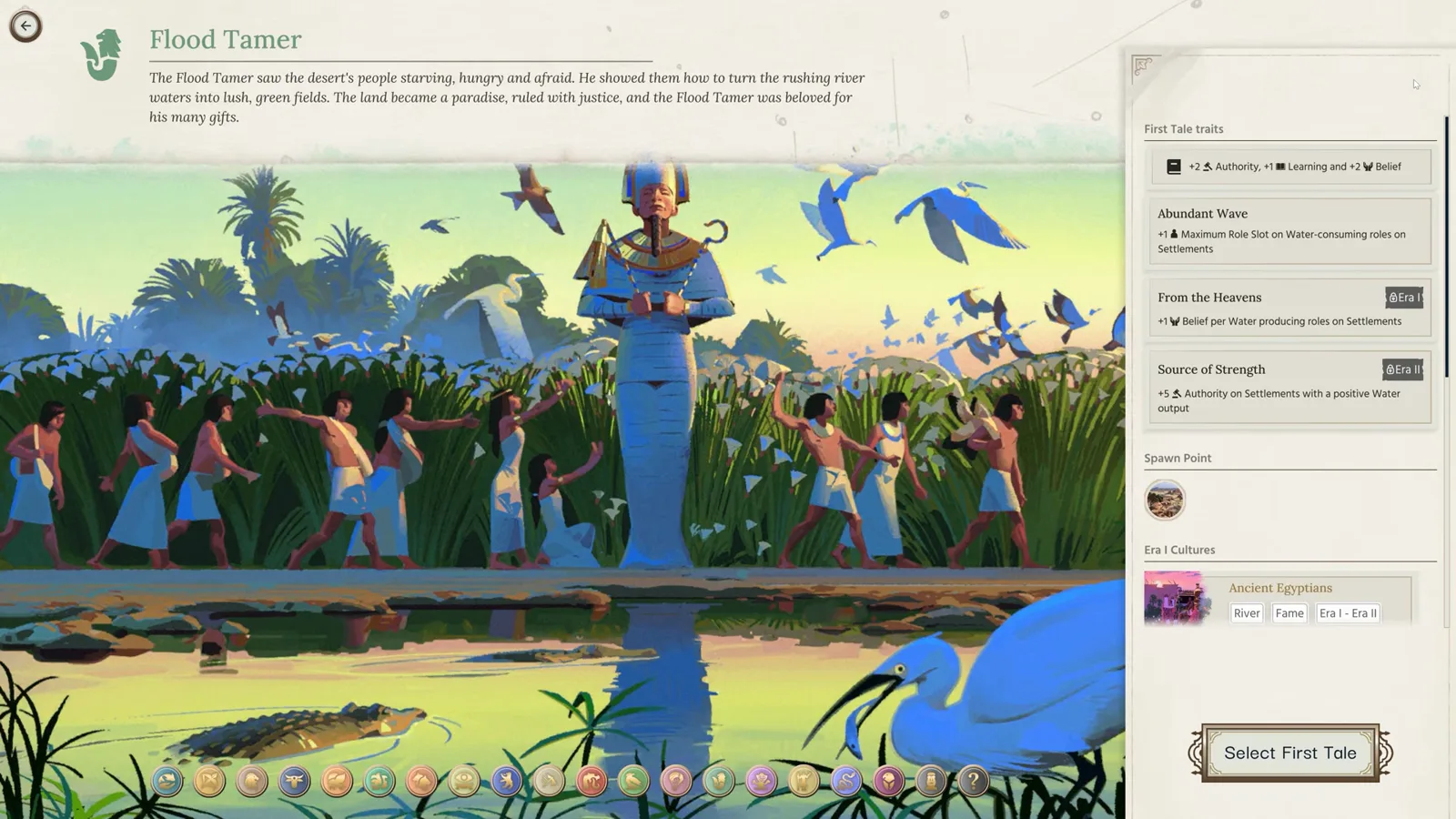
Flood Tamer at 2:10 — river food, cheap districts, and strength when your granaries overflow. Watch at 2:10 ↗ - 05
Deploy Turn 1 on handcrafted Nile hexes with scouts and settlers
After trait selection the campaign loads the Nile valley slice. Scouts and settlers spawn on irrigated river hexes with immediate founding options such as Men-Nefer or Nekhen, demonstrating how Historical Mode ties terrain, resources, and narrative from the first turn.
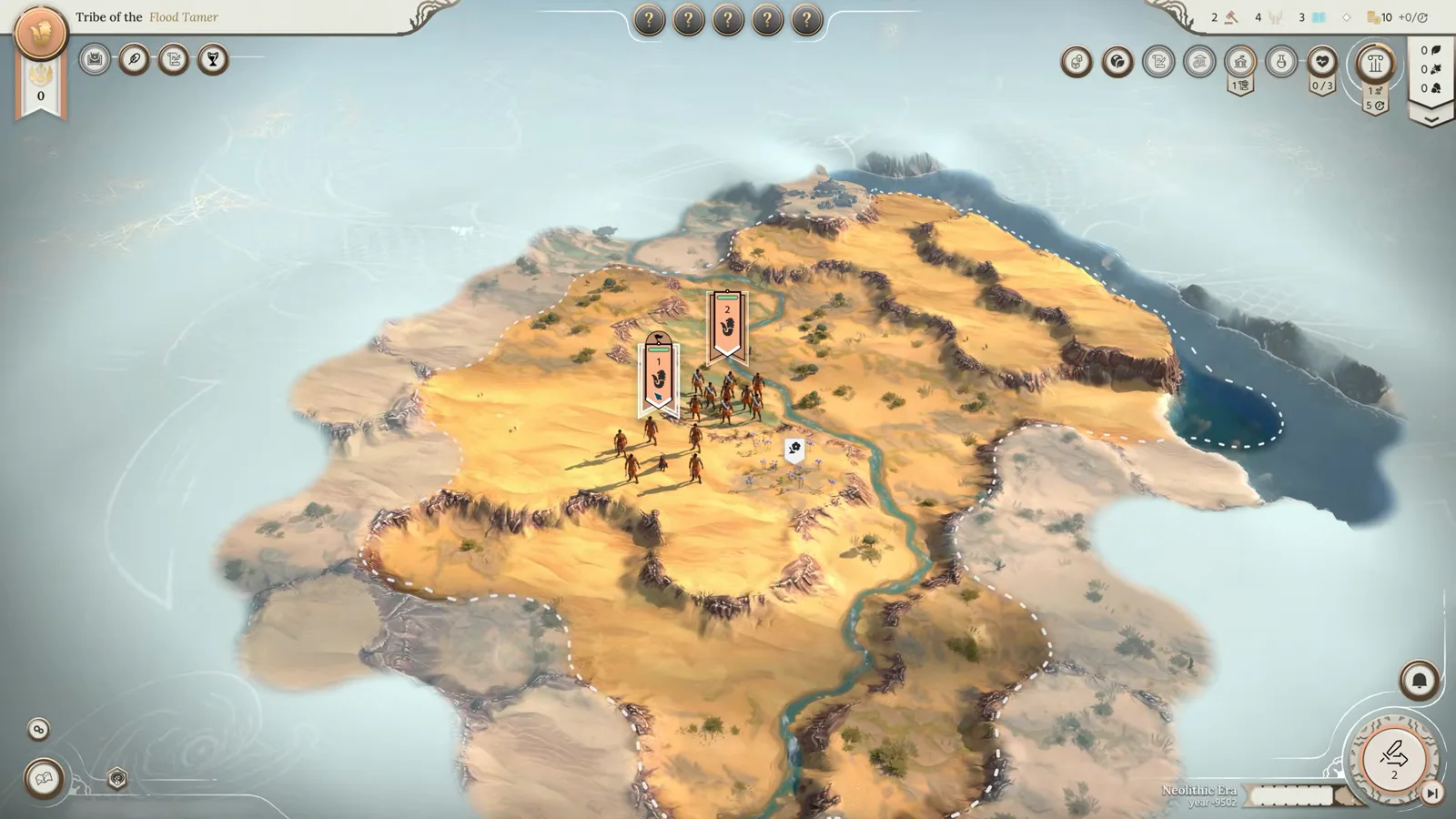
At 2:28 you are already playing on biome-accurate Nile terrain—not a generic Neolithic plain. Watch at 2:28 ↗
What Earth Cradles Appear on the First Tale Globe?
The walkthrough globe is not a decorative backdrop. Each visible pin corresponds to a historic region with localized resources, choke points, and—once you confirm—a First Tale script that sets your opening objectives. Amplitude has not published a full numbered list yet, but frame inspection and UI labels let us document the confirmed and clearly visible cradles below.
Use this table as a planning sheet before you commit on the globe. Cross-reference cultures you might evolve into via our All 70 Playable Cultures roster so your starting myth aligns with a long-term identity you actually want to play.
| Region / Map Pin (Walkthrough) | Featured First Tale or Culture Hook | Terrain & Strategic Notes |
|---|---|---|
| Nile River Delta | Flood Tamer → Ancient Egypt | River food bonuses, district industry discounts, irrigated hex start; see Ancient Egypt Flood Tamer culture guide |
| Italian Peninsula | Wild Twins (Romulus & Remus myth) | Timbered hills, authority-focused traits, aggressive culture-change combat bonus |
| Aegean Sea | Mycenaean / Bronze Age Greece cradle | Coastal islands, naval choke points, early maritime trade potential |
| Levant & Carthage Coast | Eastern Mediterranean trade corridor | Narrow seas, desert margins, high diplomacy and caravan value |
| Mesopotamian Zagros / Persia | Fertile Crescent highlands | River-adjacent plains with mountain flanks; strong early agriculture |
| Pontic–Caspian Steppe | Scythian horse cultures | Open grasslands favor mobility and pasture economies |
| Greenland & Baffin / Arctic | Saqqaq–Thule arctic peoples | Polar biomes; pairs with Thule Dogsled Hunters Custom adoption later |
| East Asia | Continental river basins & plateaus | Diverse biomes within one macro-pin; check Biomes & Climate Adaptations |
| Mesoamerica & Andes | New World highlands and jungles | Vertical terrain, isolated starts, unique resource chains |
How Do Wild Twins and Flood Tamer Traits Change Your Opening?
First Tale selection is more than lore text. Each confirmed myth applies three starting tribe traits that modify production, combat, and governance before you found your first city. Treat them like a civ-specific difficulty modifier you cannot respec without restarting the campaign.
Wild Twins (Italian Peninsula)
The Wild Twins myth mirrors the legendary wolf-rescue story associated with Rome’s foundation. Mechanically it pushes an unconventional early game:
- State of Nature: You cannot lean on standard Settlement production to churn out units the way a typical city-focused opener might. Plan around exploration, narrative objectives, and later district unlocks rather than mass-producing scouts from turn one.
- Feral Rage: +5 Strength on all units when you change to another culture. If you intend to hit the Era Crossroads early and swap cultures for a military spike, this trait rewards aggressive timing.
- Resilient Nature: +10% Authority on Authoritarianism rules applied to settlements—useful if you want tight internal control before expanding into Etruscan or Roman pathways.
Wild Twins suits players who enjoy high-tension openings and intend to use culture changes as power spikes rather than purely narrative flavor.
Flood Tamer (Nile River Delta)
Flood Tamer is the showcase tale in the October overview and the most beginner-friendly when you want clear economic feedback on river tiles:
- Abundant Waters: +2 Food from River or Water tiles—stack this with Nile hex geography and early irrigation districts for fast population growth.
- Frontier Districts: -25% Industry cost for new districts, making your first industrial or agricultural quarters cheaper while you learn the redesigned urban loop.
- Source of Strength: +5 Strength to units stationed in settlements with a positive food surplus—a gentle nudge to keep granaries healthy before you march outward.
After confirmation, the walkthrough spawns you on handcrafted Nile hexes with scouts, settlers, and founding choices such as Men-Nefer or Nekhen, proving that Historical Mode loads purpose-built scenarios instead of generic tundra starts.
Which Starting Region Should You Pick First?
There is no universally “best” pin, but you can match myths to learning goals:
- Learn economy and district pacing → Flood Tamer on the Nile. River food and discounted districts teach Humankind 2’s resource loop without hiding bonuses in obscure systems.
- Learn combat timing around culture changes → Wild Twins on Italy. State of Nature forces creative unit planning; Feral Rage pays off when you practice Crossroads swaps.
- Learn maritime trade and island control → Aegean or Levant pins when you want harbor districts early.
- Learn biome tech and mobility → Greenland / Saqqaq–Thule for polar adaptation trees and eventual dogsled Customs from neighbors.
- Learn isolation and vertical maps → Andes or Mesoamerica pins for mountain jungle logistics.
Whichever pin you choose, read the Historical Mode & First Tales page next so you understand how Common History, Shared Land, and Foreign Contact gates interact with your geography.

HUMANKIND 2 — First Gameplay Overview Walkthrough (Earth map & First Tales)
How Does Turn 1 on the Nile Connect to the Wider Earth Map?
Even if you never replay Flood Tamer, the Nile deployment teaches rules that apply to every Earth cradle:
- Hex fidelity: Coasts, rivers, and floodplains match real silhouettes, so biome adaptations trigger predictably.
- Immediate city choices: Founding Men-Nefer or Nekhen shows named historical sites instead of abstract “Capital City” placeholders.
- Unit mix at spawn: Scouts plus settlers telegraph exploration-first pacing shared across Historical scenarios.
- Visual district growth: Later footage in the same video shows Egyptian architecture climbing riverbanks—evidence that starts influence art direction long before the Industrial Era.
When you graduate from tutorial curiosity to roster planning, pair this guide with the Ancient Egypt Flood Tamer culture guide for mid-game Customs, and skim the 70-culture era list for neighbors you can legally adopt after meeting contact rules.
What Should You Do After Choosing a Starting Location?
Once your tribe is on the map, follow a consistent checklist regardless of pin:
- Scout two food types and one strategic resource within five turns so Source of Strength or similar surplus traits stay active.
- Place your first district on a bonus tile (river, coast, or hill) aligned with your tale—Flood Tamer players should prioritize river food before pure industry.
- Mark neighbor contact directions on the minimap; Crossroads culture options often require Foreign Contact with specific regions highlighted on the Earth map.
- Plan a biome adaptation early if you sit in desert, tundra, or polar tiles; the Biomes & Climate Adaptations page lists the eight trees shown in the overview.
- Bookmark arctic Customs such as Thule Dogsled Hunters even if you did not start in Greenland—you can adopt neighbor technologies later without switching your entire culture.
Historical Mode’s Earth map is Humankind 2’s clearest statement that place matters in a 4X again. Use the video walkthrough steps above to replicate Amplitude’s menu path, compare Wild Twins and Flood Tamer with eyes open, and treat every pin on the globe as a distinct tutorial for how humanity’s real cradles might have played on a hex grid.
Related Chronicles
cultures
Humankind 2 Ancient Egypt Guide: Flood Tamer & Customs
Humankind 2 Ancient Egypt (Flood Tamer): Nile traits, five Customs, desert wonders, Men-Nefer yields, and optional six-era persistence at the Crossroads.
guides
Humankind 2 Console Release Date: PS5, Xbox & Steam Deck
Humankind 2 on PS5, Xbox, or Steam Deck? As of Oct 2026 only the 2027 Steam PC launch is confirmed—Game Pass, Proton, cloud play, and console port lessons.
guides
Humankind 2 Playtest Sign-Up (Insiders) & PC Requirements
How to join the Humankind 2 Insiders Program closed playtest on Steam, plus verified Minimum and Recommended PC system requirements (RAM, GPU, CPU, storage).
Was this chronicle helpful?
Thanks for your feedback!