
Humankind 2 Cultures Tier List: Best Early Civilizations
Rank Humankind 2 early-era cultures for 2027 pre-release: S-tier Egyptians, Romans, Carthage, plus Persia, Thule, and steppe picks by Customs Trees.
Frequently Asked Questions
What makes a culture S-tier in Humankind 2's early eras?
Should I stay on one culture or switch at the Era Crossroads?
How do Persians and Parsaans compare to Rome and Carthage in Era II?
Can I borrow Thule Customs without playing as the Thule?
Are B-tier cultures like Scythians and Etruscans ever worth picking?
What Is the Best Humankind 2 Early-Era Culture Tier List for 2027?
This Humankind 2 cultures tier list ranks Era I Ancient and Era II Classical civilizations using pre-release insider metas from the October 2026 gameplay walkthrough—not recycled Humankind 1 tier charts. Amplitude’s redesign makes culture choice a long-horizon strategy: optional Crossroads switching, five-node Customs Trees, capstone Legacy Traits, and Foreign Contact borrowing mean the “best” pick depends on whether you transcend one identity or pivot through Mediterranean, steppe, or Polar map logic. Cross-check every civilization slot against our complete list of all 70 playable cultures before you commit a dynasty.
How Should You Judge Cultures in Humankind 2’s Redesigned System?
Before S through B tiers, apply three evaluation lenses that the old game never needed. Full mechanics live in our Culture Evolution, Crossroads & Customs guide; here is how tier theory uses them.
1. Single-culture staying power (Transcendence vs Evolution)
Because switching at the Era Crossroads is optional, cultures with scaling five-node Customs Trees and durable Legacy Traits climb the tier list for players who want one visual and narrative identity across all six eras. Ancient Egyptians exemplify the pattern: Diligent Traders, River Transport, Hieroglyphics, and Priestly Class feed river logistics, knowledge, and temple economies while monument projects like Temple of Ra and Great Pyramids scale into Classical pressure. Pair that tree with the Ancient Egypt Flood Tamer guide if you spawn on Nile-adjacent Earth map starting locations.
2. Crossroads pivot value
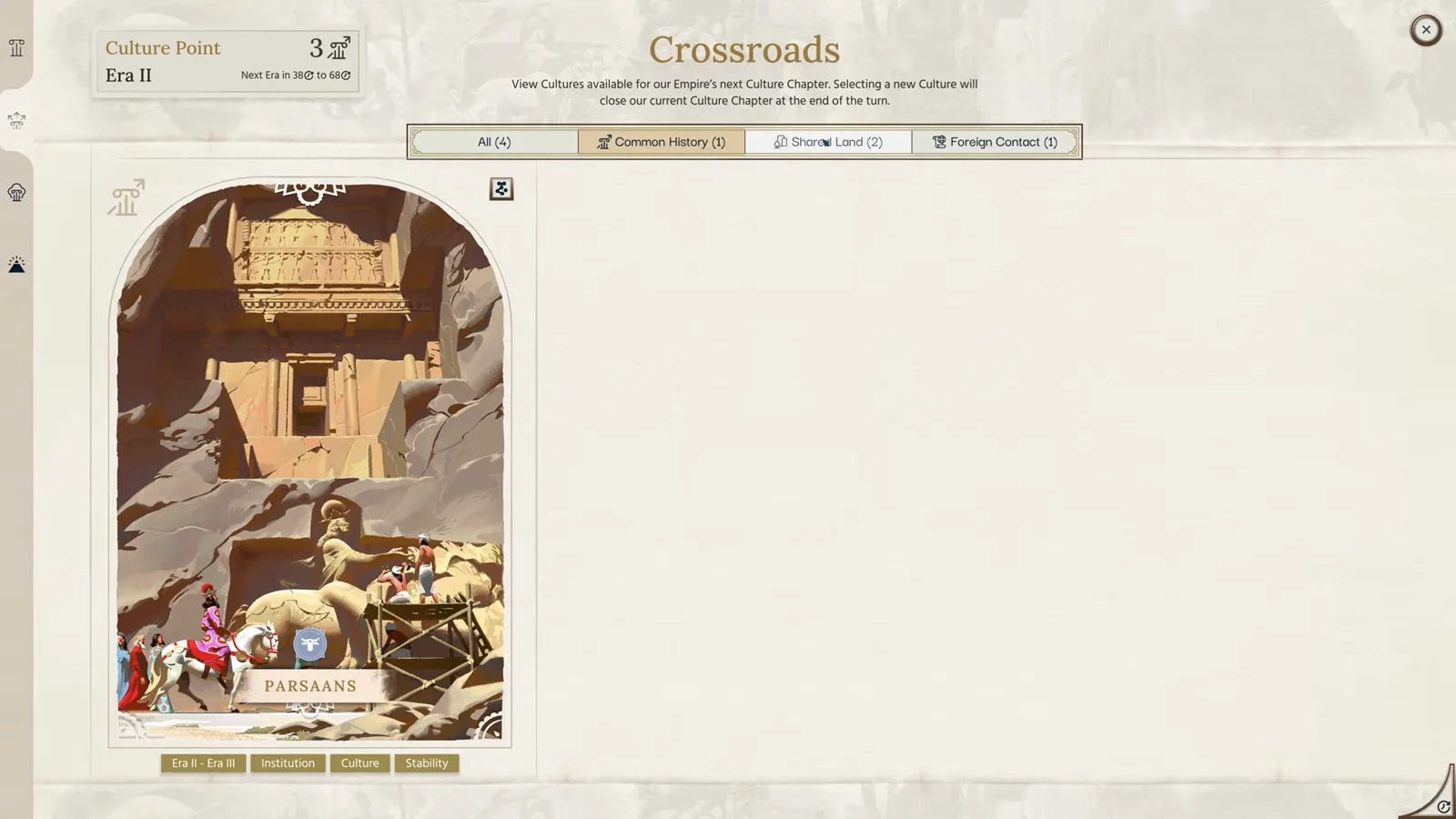
Cultures you unlock via Common History, Shared Land, or Foreign Contact must justify the opportunity cost of abandoning partially filled Customs. Rome, Carthage, and Persia / Parsaans on the Era II screen are high pivot value because Egyptian or Mycenaean empires often already control Mediterranean coasts, North African shared land, or Near Eastern contact lines—exactly the links shown on the Crossroads UI.
3. Borrowable neighbor Customs
Even when a culture stays B-tier as a main pick, it can be A-tier as a Foreign Contact donor. Polar specialists matter because harsh biomes are no longer dead hexes; borrowing Dogsled Hunters from the Thule without empire swapping is often stronger than forcing an full culture change on an Egyptian or Roman campaign. Read Thule Dogsled Hunters Custom for adoption prerequisites.
Which Cultures Are S-Tier Meta Anchors in Early Humankind 2?
S-tier entries define lobby expectations: they win food surpluses, district timing, or naval tempo before opponents reach the next Crossroads.
Ancient Egyptians (Era I)
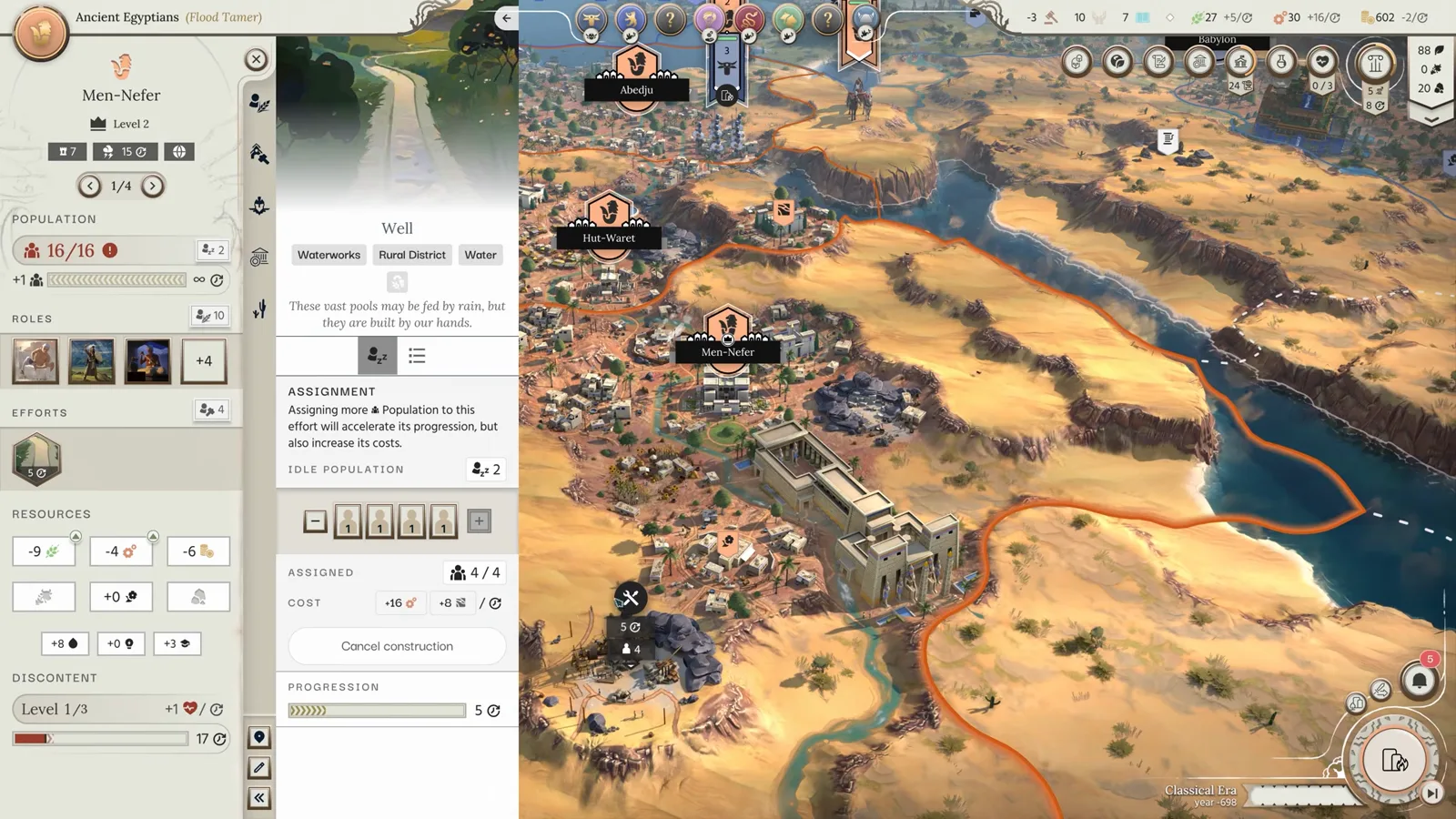
Ancient Egyptians remain the default S-tier Ancient pick. Flood Tamer adds +2 Food on river tiles, district industry costs drop 25%, and food-surplus settlements gain +5 Strength—a rare economy-to-military bridge. Monument lines (Temple of Ra, Great Pyramids) convert Culture and Industry into map-timeline threats. Insiders who transcend Egypt rather than pivot report the highest win rate on river-dense Earth seeds when they finish the Customs Tree before Era II.
Romans (Era II Classical)
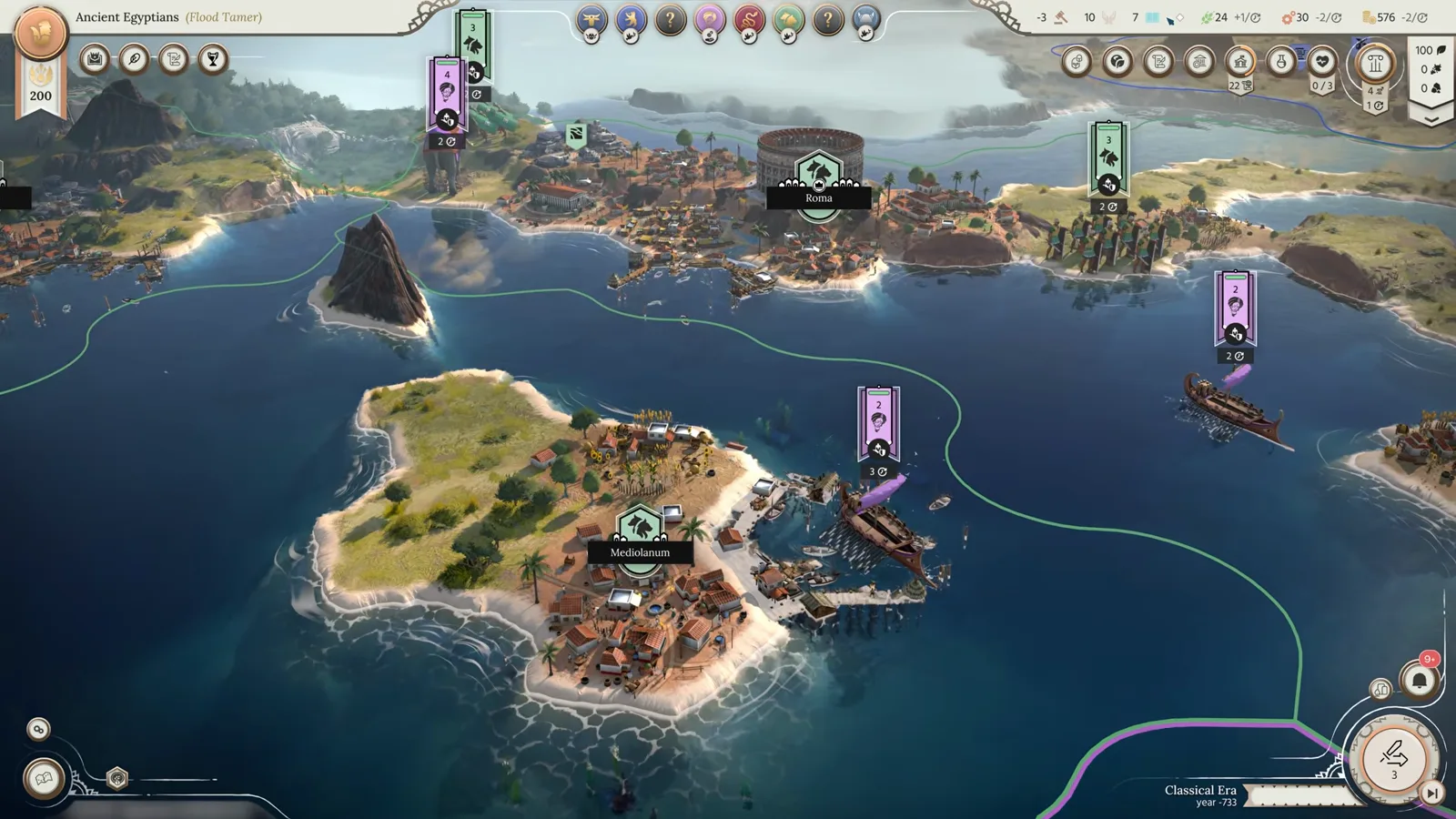
Romans anchor Mediterranean urban density: legion expansion, aqueduct-style district stacking, and Colosseum culture spikes. The Wild Twins line enables a Feral Rage +5 Strength combat pivot when you need to stall a steppe raid or punish a naval landing. Choose Rome when Shared Land places your core on temperate coastlines and you already invested Culture Points into administrative Customs—you are not restarting from zero, you are weaponizing Classical infrastructure.
Carthaginians (Era II Classical)
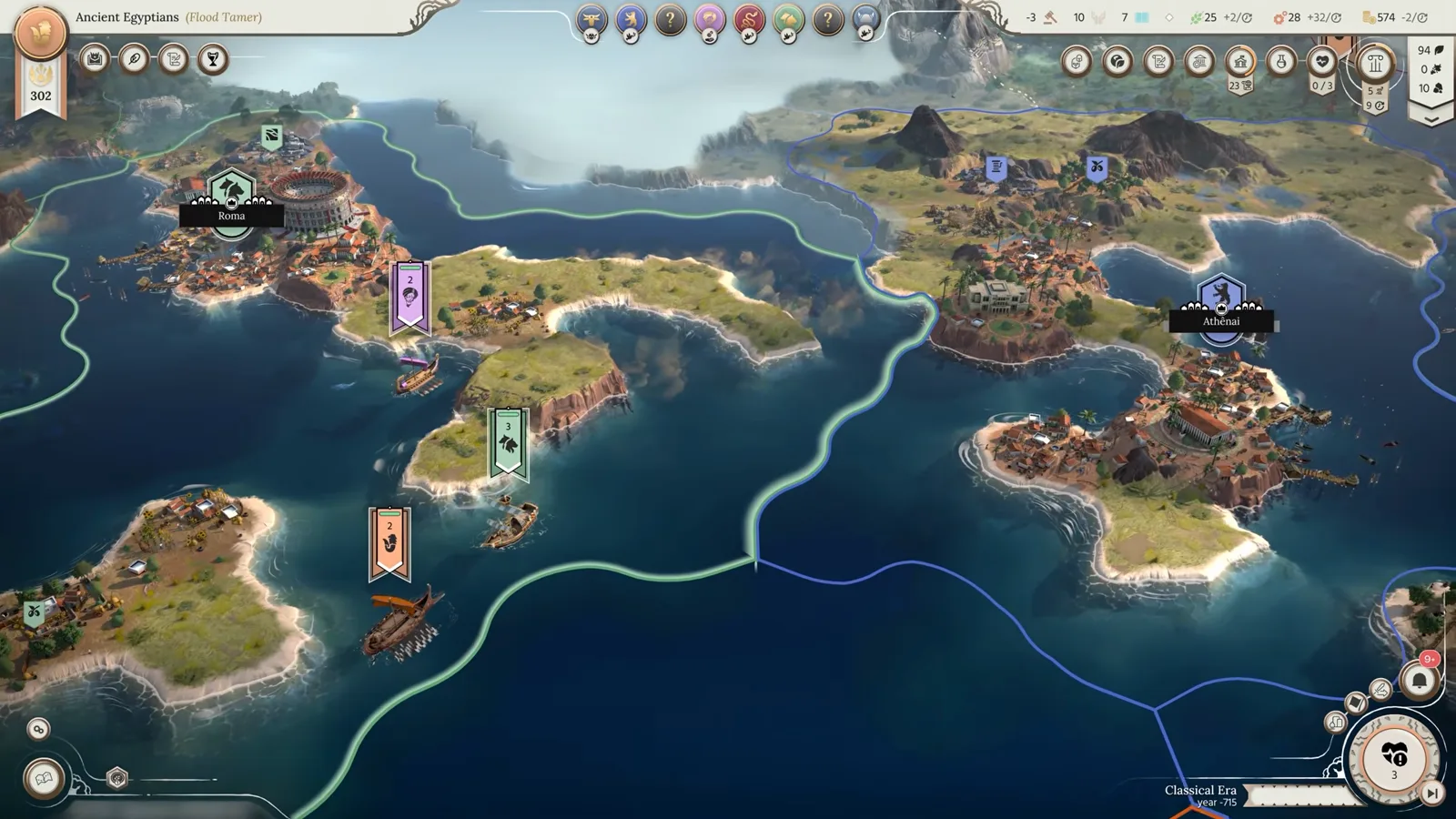
Carthaginians own archipelago and Mediterranean maritime trade tempo. Insiders treat Carthage as the answer to multi-continent trade lanes, Alpine-gap war elephant expeditions, and Shared Land transitions off Egyptian North African holdings. If your scout report shows fragmented coasts and shallow-sea routes, Carthage out-scales Rome on gold-per-turn even when Rome wins raw city count.
Which Early Cultures Rank A-Tier (Specialists and Military Powerhouses)?
A-tier cultures win campaigns when map geometry matches their kit or when they serve as mandatory pivot targets.
| Culture | Era / role | Why A-tier |
|---|---|---|
| Persians / Parsaans | Era II Classical | Highland and desert border warfare; spearmen and cavalry choke-point control on continental divides. |
| Thule | Arctic / Polar | Dogsled Hunters snow mobility; top Foreign Contact borrow for Polar adaptations without culture swap. |
| Mycenaeans | Era I Ancient | Aegean Bronze Age fortress networks and coastal hill defense chains into Classical pivots. |
| Abbasids | Medieval bridge | Golden Age science and trade scaling when Common History links from Egyptian or Near Eastern campaigns—plan two eras ahead. |
Persians / Parsaans appear on the same Crossroads card spread as Rome and Carthage; pick them when your diplomacy graph favors land locks over sea lanes. Thule rarely beats Egyptians on a pure Nile start, but on Polar-adjacent spawns from the Earth map starting locations guide they jump to hidden S-tier if you integrate borrowed Customs early.
Which Cultures Sit at B-Tier (Situational and Biome-Dependent)?
B-tier is not “unplayable”—it is map-contractual. These civilizations spike when biome and diplomacy align and fade when S-tier economies snowball.
- Scythians — Eurasian steppe cavalry raiders; dominate open plains, bleed on river-walled Egyptian surplus settlements.
- Etruscans — Italic peninsula stepping stone into Roman Shared Land; strong when you need a cheap Classical bridge without full Egypt pivot.
- Saqqaq & Dorset — Early Arctic survival predecessors; essential on Greenland-style seeds, replaceable once Thule contact matures.
- Normans — Coastal feudal expansion; reward island-hopping Europe layouts, weaker on inland desert trade routes.
When your lobby rolls heavy diplomacy, trade, and warfare interactions, re-read diplomacy, trade, and warfare mechanics—B-tier raiders often upgrade to A-tier if Foreign Contact timers favor punitive strikes over monument races.
How Do You Use This Tier List in Your Next Playtest Session?

Humankind 2 Gameplay Overview — Culture Crossroads and Customs
Use a simple decision tree at lobby select:
- Roll the Earth seed and mark river, archipelago, steppe, or Polar clusters using Earth map starting locations.
- Pick S-tier anchor matching biome (Egypt rivers, Carthage seas, Rome temperate bays).
- Pre-plan Crossroads link—Shared Land into Carthage, Foreign Contact into Persia, or transcend Egypt with finished Legacy Trait.
- Budget one borrow slot—usually Thule Dogsled Hunters on mixed-climate maps.
- Validate with Customs math in Culture Evolution and Customs before you lock multiplayer civ.
Quick Reference: Early-Era Tier Summary
| Tier | Cultures | Pick when |
|---|---|---|
| S | Ancient Egyptians, Romans, Carthaginians | You want scaling Customs, strong Legacy Traits, and Crossroads flexibility on rivers or Mediterranean trade. |
| A | Persians / Parsaans, Thule, Mycenaeans, Abbasids | You need choke-point armies, Polar borrows, fortress openings, or medieval science/trade bridges. |
| B | Scythians, Etruscans, Saqqaq, Dorset, Normans | Map biome rewards raiding, Italic bridges, Arctic early survival, or coastal feudal expansion. |
For roster completeness and era placement of every civilization named here, keep all 70 playable cultures bookmarked alongside this tier list—new playtest cultures can shift B-tier specialists upward without changing S-tier anchors overnight.
Related Chronicles
cultures
Humankind 2 Ancient Egypt Guide: Flood Tamer & Customs
Humankind 2 Ancient Egypt (Flood Tamer): Nile traits, five Customs, desert wonders, Men-Nefer yields, and optional six-era persistence at the Crossroads.
mechanics
Humankind 2 Diplomacy, Trade & Warfare Mechanics Guide
Humankind 2 diplomacy, trade routes, and tactical border warfare: Rome vs Carthage, Persia choke points, Foreign Contact Customs, and unit command UI.
mechanics
Humankind 2 Sled Dogs Guide: Thule Customs & Polar Units
Adopt Thule Dogsled Hunters in Humankind 2 via Foreign Contact, unlock Polar Adaptations, and deploy sled-dog scouts without abandoning Egyptian culture.
Was this chronicle helpful?
Thanks for your feedback!