
Humankind 2 Biomes, Climate Change & Adaptations Guide
Complete guide to all 8 Biomes in Humankind 2: Desert, Forest, Tundra, and Polar Adaptation Trees, perishable food logistics, and climate change survival.
Frequently Asked Questions
How many biomes are in Humankind 2?
How do Biome Adaptation Trees work in Humankind 2?
Does food spoil or expire in Humankind 2?
Is there dynamic climate change in Early and Mid Eras?
Which Polar and Desert adaptations were confirmed in the October 2026 walkthrough?
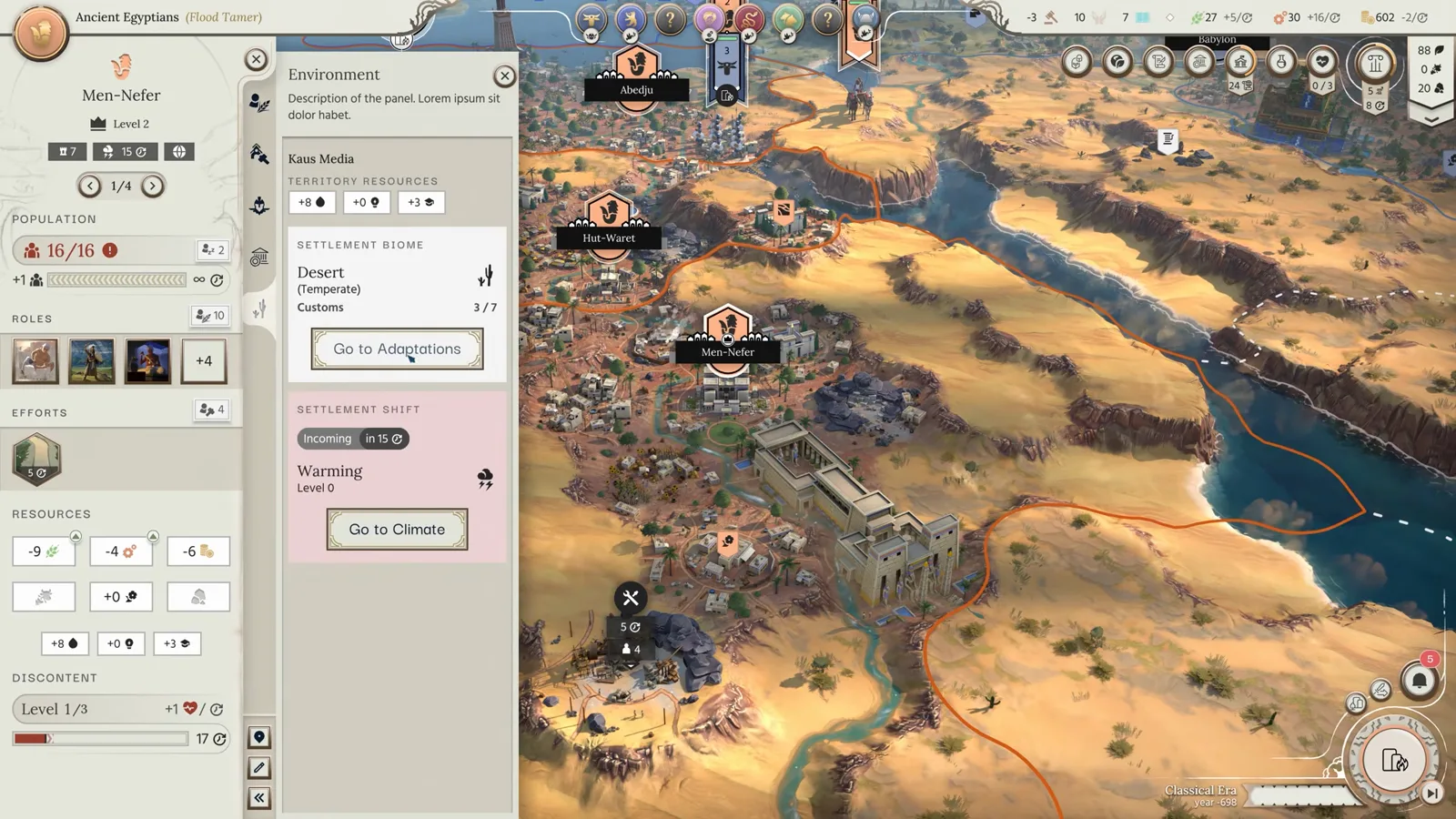
How Do the 8 Biomes Work in Humankind 2?
In most historical 4X strategy games, terrain tiles are little more than color-coded yield modifiers: a desert tile gives zero food, a forest tile gives +1 industry, and once you build a generic farm or mine, every continent plays identically. Humankind 2 fundamentally reimagines environmental strategy by dividing the world into 8 distinct Biomes, each equipped with its own Biome Adaptation Tree, unique wildlife, resource preservation rules, and multi-era Climate Change events.
As demonstrated in the October 15, 2026 Gameplay Overview, simply marching an army or settler into an unfamiliar ecosystem without the right adaptations is a recipe for attrition. Whether you are playing on the handcrafted Earth map in Historical Mode or a procedural continent in Sandbox Mode, your empire must actively learn how to inhabit the land it claims.
Confirmed Biome Adaptation Trees (Desert, Forest, Polar & Tundra)
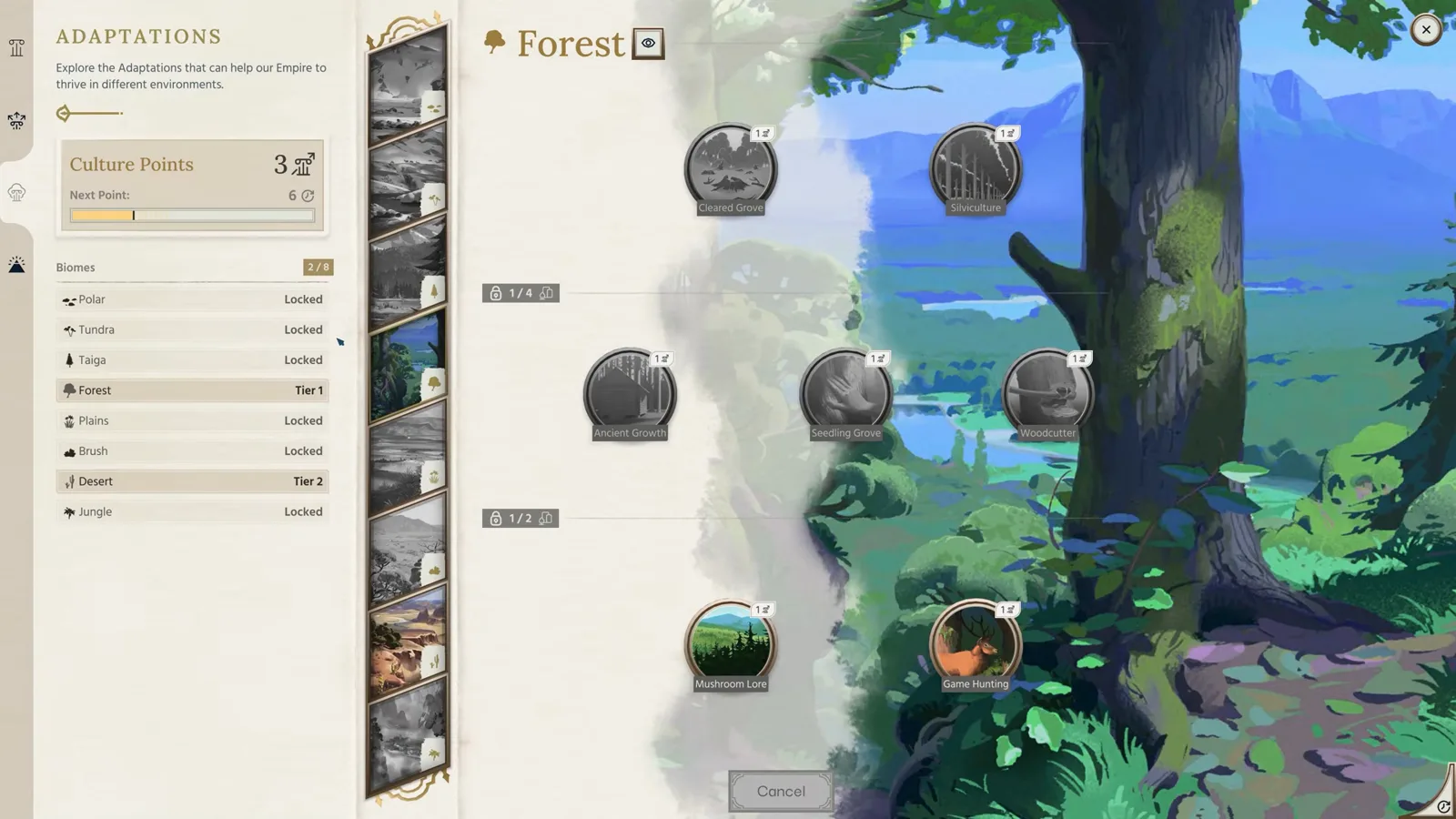
Whenever your civilization settles in or controls territory belonging to one of the 8 Biomes, you gain access to that biome’s dedicated Adaptations screen. Unlike your Cultural Progression Tree (which reflects who your people are), Biome Adaptations reflect where your people live.
Here is a breakdown of the three Biome Adaptation Trees shown in detail during the official walkthrough:
1. Desert Biome Adaptations
Designed for empires expanding outward from river cradles like the Nile (Ancient Egyptians) or Mesopotamia (Abbasids / Parsaans) into surrounding arid dunes and rocky canyons:
- Wells & Subterranean Irrigation: Allows settlements to tap deep aquifers and sustain population growth on waterless hexes.
- Oasis Agriculture & Date Palms: Turns isolated desert oases into high-yield agricultural anchors.
- Camel Caravans & Arid Logistics: Eliminates desert movement penalties and extends trade route range across scorching wastelands.
2. Forest Biome Adaptations
Unlocked by civilizations settling temperate woodlands, river valleys, and timber-rich hills (such as the Wild Twins Italian Peninsula start or Northern European forests):
- Woodcutting & Timber Clearing: Converts dense forest hexes into high-production lumber yards and construction material hubs.
- Deer Hunting & Woodland Foraging: Secures reliable early-era protein sources and pelts before large-scale open-field farming.
- Thicket Fortifications & Ambush Tactics: Leverages dense canopy terrain for defensive sightline blocking and ranged ambushes.
3. Polar & Tundra Biome Adaptations
Shown in the walkthrough alongside Arctic cultures like the Saqqaq and the Thule of Greenland, the Polar Adaptation Tree transforms frozen edges of the map into strategic powerhouses:
- Ice Crossing: Enables units and trade parties to traverse frozen straits, sea ice, and glacial hexes safely.
- Long Winter: Mitigates seasonal population starvation and production freezes during extreme polar nights.
- Sled Dogs & Whaling: Unlocks high-mobility Arctic reconnaissance (synergizing with the Thule Dogsled Hunters Custom) and marine harvesting along icy coastlines.

Perishable Food, Resource Decay & Climate Shifts
Why do Biome Adaptations matter so much in Humankind 2? Because Amplitude Studios has introduced Perishable Resources and Historical Climate Fluctuations directly into the core economic loop:
| Environmental Mechanic | How It Works in Humankind 2 | Strategic Counterplay |
|---|---|---|
| Perishable Food & Spoilage | Surplus food cannot be stockpiled infinitely by default; unpreserved organic yields decay over turns | Research granaries, salt curing, cold-weather storage, and biome preservation nodes |
| Biome Supply Lines | Armies campaigning deep inside hostile biomes (e.g., Desert or Polar) suffer supply attrition | Unlock the target biome’s Adaptation Tree or adopt a neighbor’s survival Custom (e.g., Dogsled Hunters) |
| Historical Climate Shifts | Natural climate cycles across the 6 Eras (droughts, Little Ice Ages, aridification) alter hex fertility | Diversify your empire across multiple biomes so a single regional drought does not collapse your capital |
Official Walkthrough Videos

Related Chronicles
cultures
Humankind 2 Cultures List: All 70 Civilizations & 6 Eras
Complete list of confirmed Humankind 2 cultures across all 6 historical eras, including Ancient Egyptians, Mycenaeans, Carthaginians, Rome, Abbasids, and Thule.
guides
Humankind 2 vs Civilization 7: Key Differences Compared
Compare Humankind 2 vs Sid Meier Civilization VII across 8 core 4X pillars: 6 Eras vs 3 Ages, 70 playable cultures, optional Crossroads, and Earth biomes.
mechanics
Humankind 2 Culture Evolution, Crossroads & Customs Guide
How do Culture Evolution, the Era Crossroads, and Customs work in Humankind 2? Master Culture Points, Legacy Traits, Common History, and neighbor Customs.
Was this chronicle helpful?
Thanks for your feedback!