
Humankind 2 Historical Mode: Real Earth Map & First Tales
How does Historical Mode work in Humankind 2? Explore the authentic Earth map built with 30+ historians, ~20 First Tale starting myths, and Sandbox differences.
Frequently Asked Questions
What is the difference between Historical Mode and Sandbox Mode in Humankind 2?
How many starting locations are in Humankind 2 Historical Mode?
Are you forced to follow real history after starting in Historical Mode?
Did real historians work on Humankind 2?
What are the confirmed First Tales in Humankind 2 Historical Mode?
What Is Historical Mode in Humankind 2?
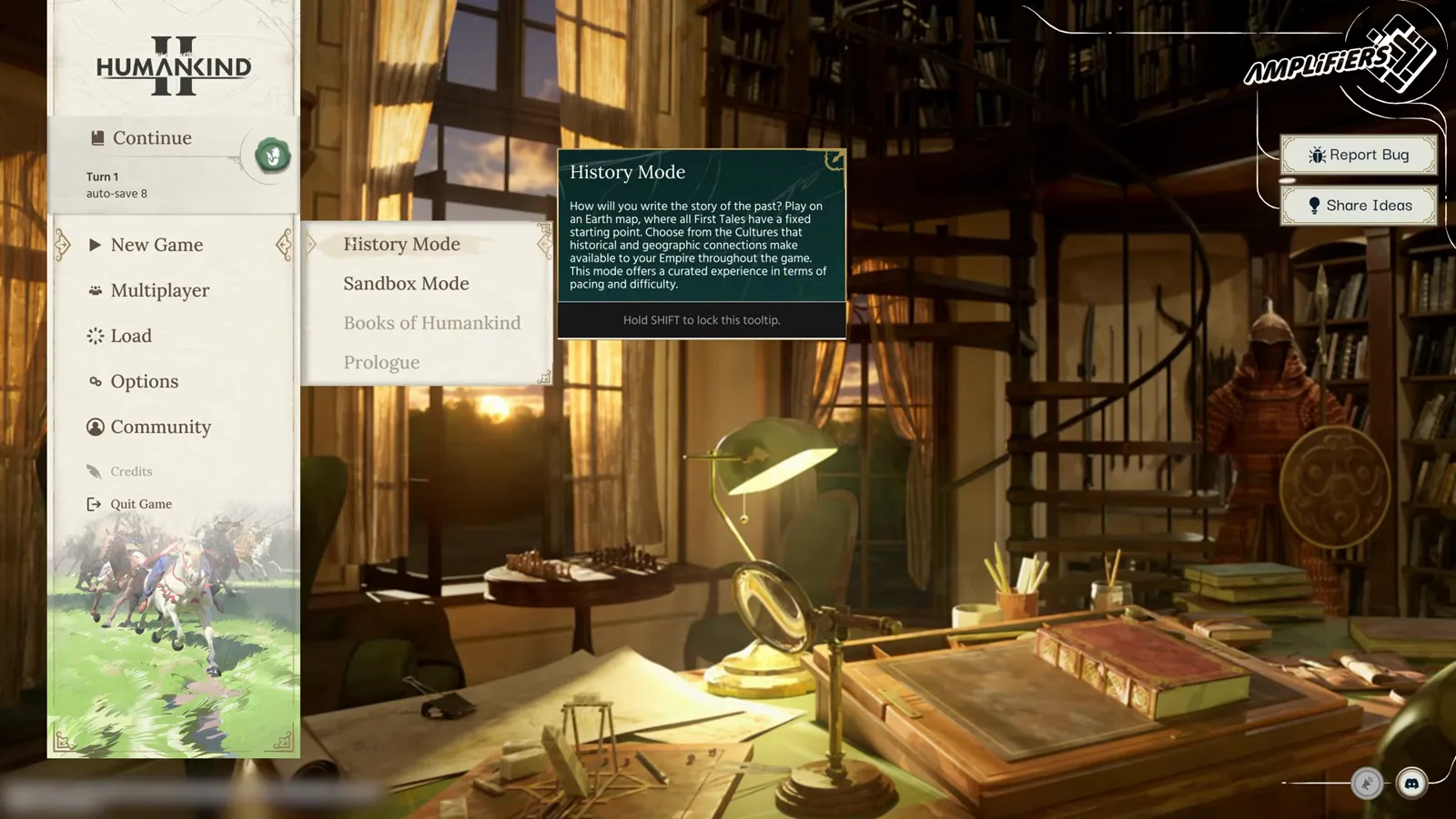
One of the biggest announcements in the October 15, 2026 Gameplay Overview is that Humankind 2 splits its core campaign experience into two distinct game modes right from the main menu: Historical Mode and Sandbox Mode.
While Sandbox Mode preserves the classic 4X tradition of procedurally generated continents and randomized starting seeds, Historical Mode is built for strategy players who want deep historical immersion. As Game Director Benoît Hembert and Narrative Director Jeff Spock explained, Amplitude worked with more than 30 academic historians—each an expert in a specific geographical region and historical period—to craft an authentic real-world Earth map where geography, ecology, and mythology directly shape your opening turns.
| Feature / Rule | Historical Mode (New in Humankind 2) | Sandbox Mode (Classic 4X) |
|---|---|---|
| World Map Geometry | Handcrafted, authentic real-world Earth map | Procedurally generated continents, islands & climates |
| Starting Locations | ~20 curated cradles of civilization (Nile, Tiber, Aegean, etc.) | Randomized spawn points balanced by map generator |
| Opening Phase | Narrative First Tale founding myth tied to your region | Standard Neolithic/Ancient exploration & settlement |
| Cultural Evolution | Grounded in Common History, Shared Land, & Foreign Contact | Full access to the 70 Playable Cultures & Customs |
| Post-Start Freedom | 100% open—rewrite history from an authentic starting point | 100% open—pure procedural 4X sandbox |
How Do “First Tales” Founding Myths Work?
In the original Humankind, every campaign began with an identical Neolithic tribe wandering around picking up glowing curiosities and hunting mammoths before claiming a culture. In Humankind 2’s Historical Mode, that generic opening is replaced by First Tales—playable founding myths inspired by real archaeological and mythological traditions.
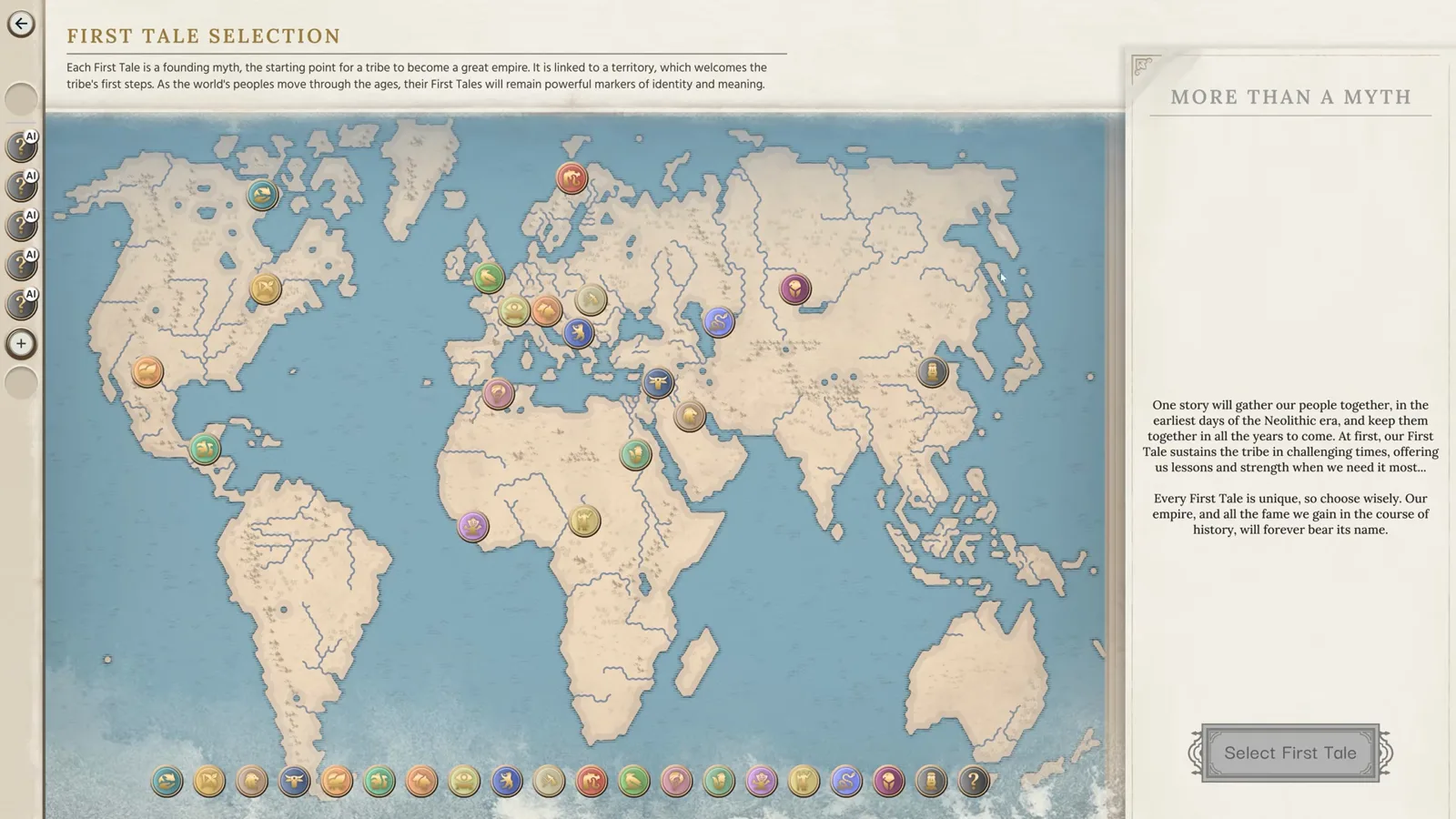
When you launch a Historical Mode campaign, you pan across a stylized cartographic globe featuring roughly 20 starting locations. Each marker represents a historic cradle of civilization and presents a bespoke First Tale:
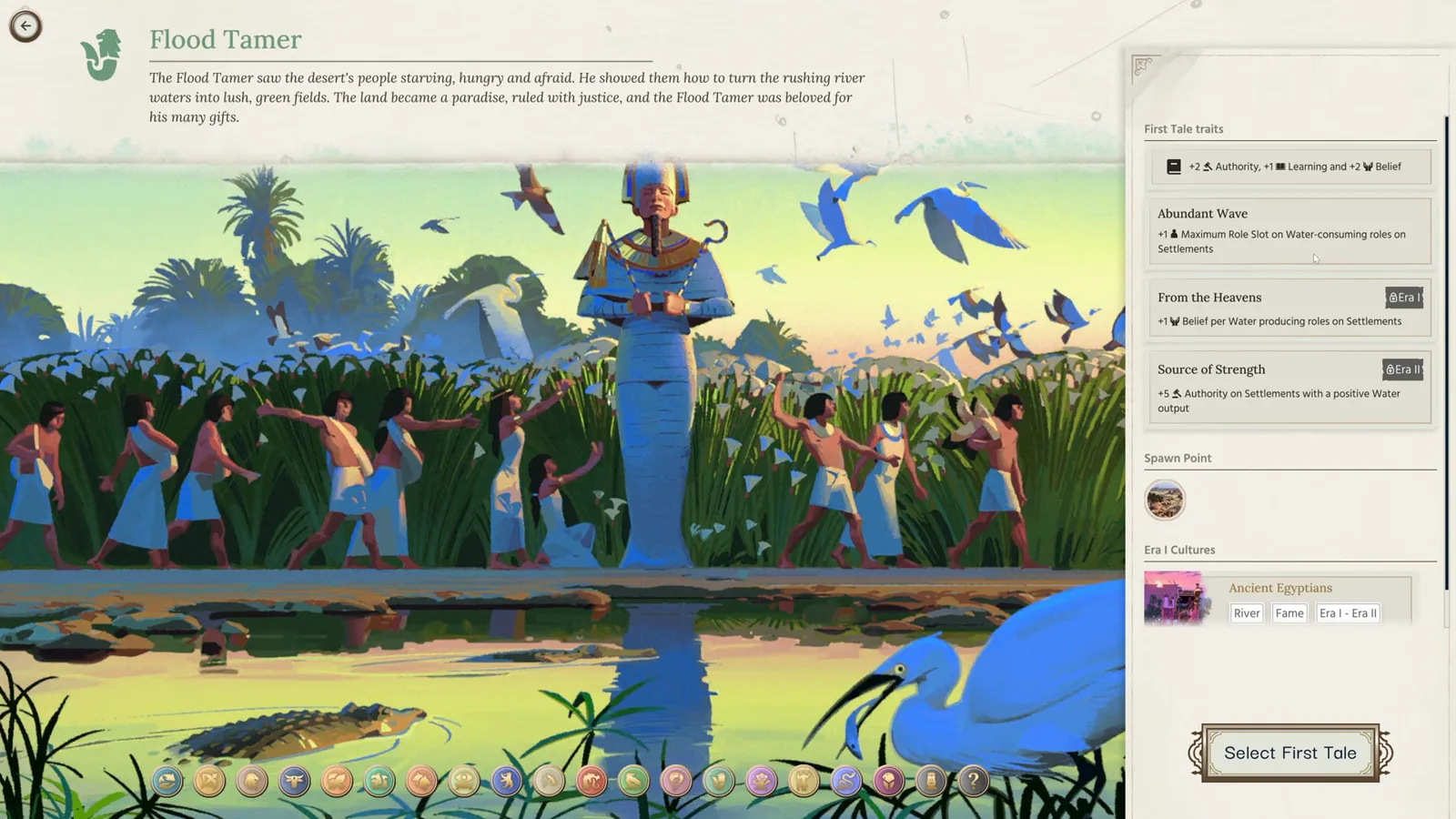
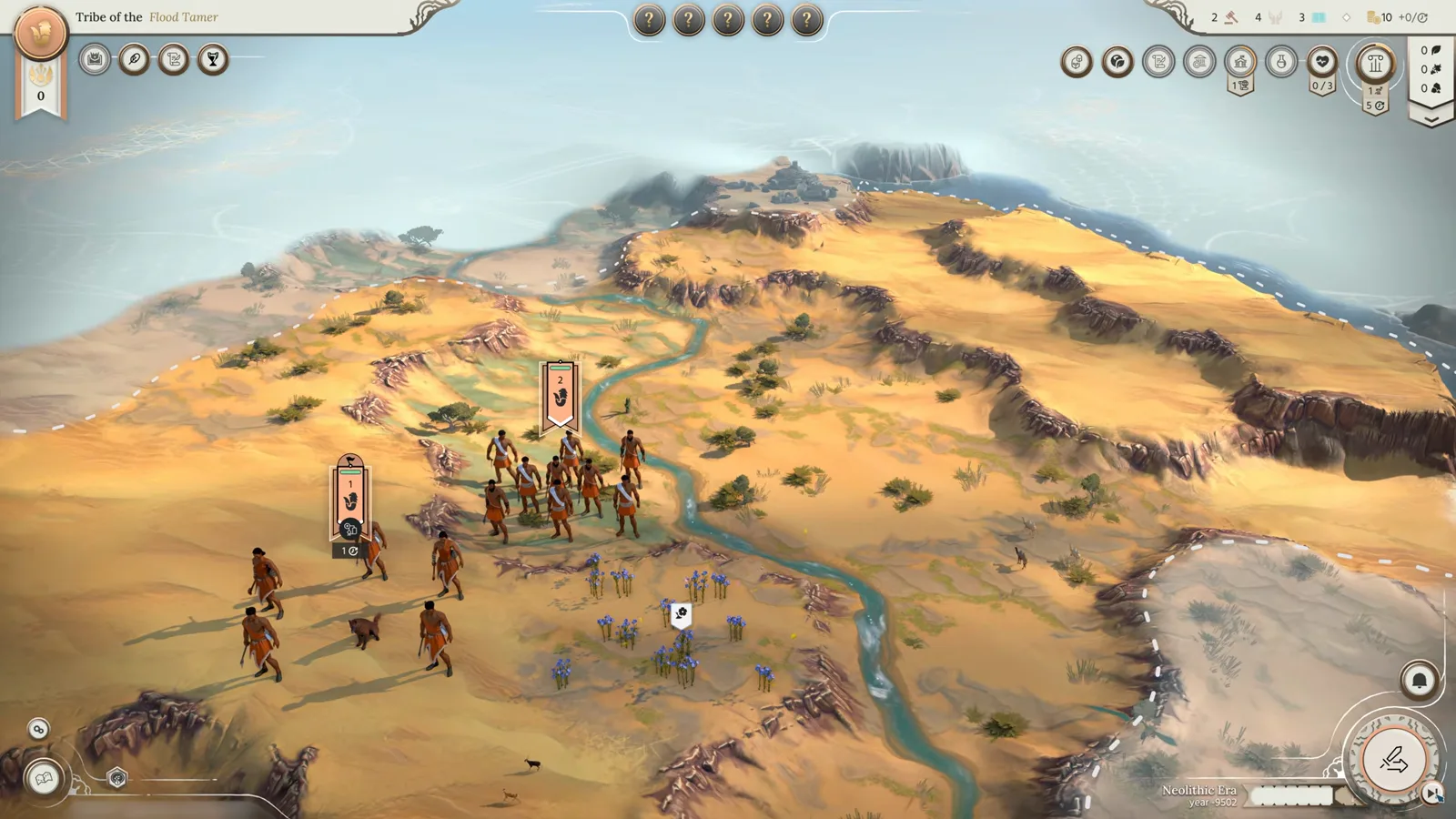
1. Flood Tamer (Nile River Valley — Ancient Egypt)
- Location: Lower & Upper Nile Delta, North Africa.
- Founding Myth: “Along the banks of the Nile, your people are struggling to survive destructive seasonal floods and violent hippos. With help from the gods, you will tame the waters and lay the foundations for the Pharaohs of Ancient Egypt.”
- Gameplay Mechanics: Tasks your early settlers with mastering the Nile’s annual inundation, establishing irrigated floodplains, and unlocking the Ancient Egyptians alongside their signature River Transport and Hieroglyphics Customs.
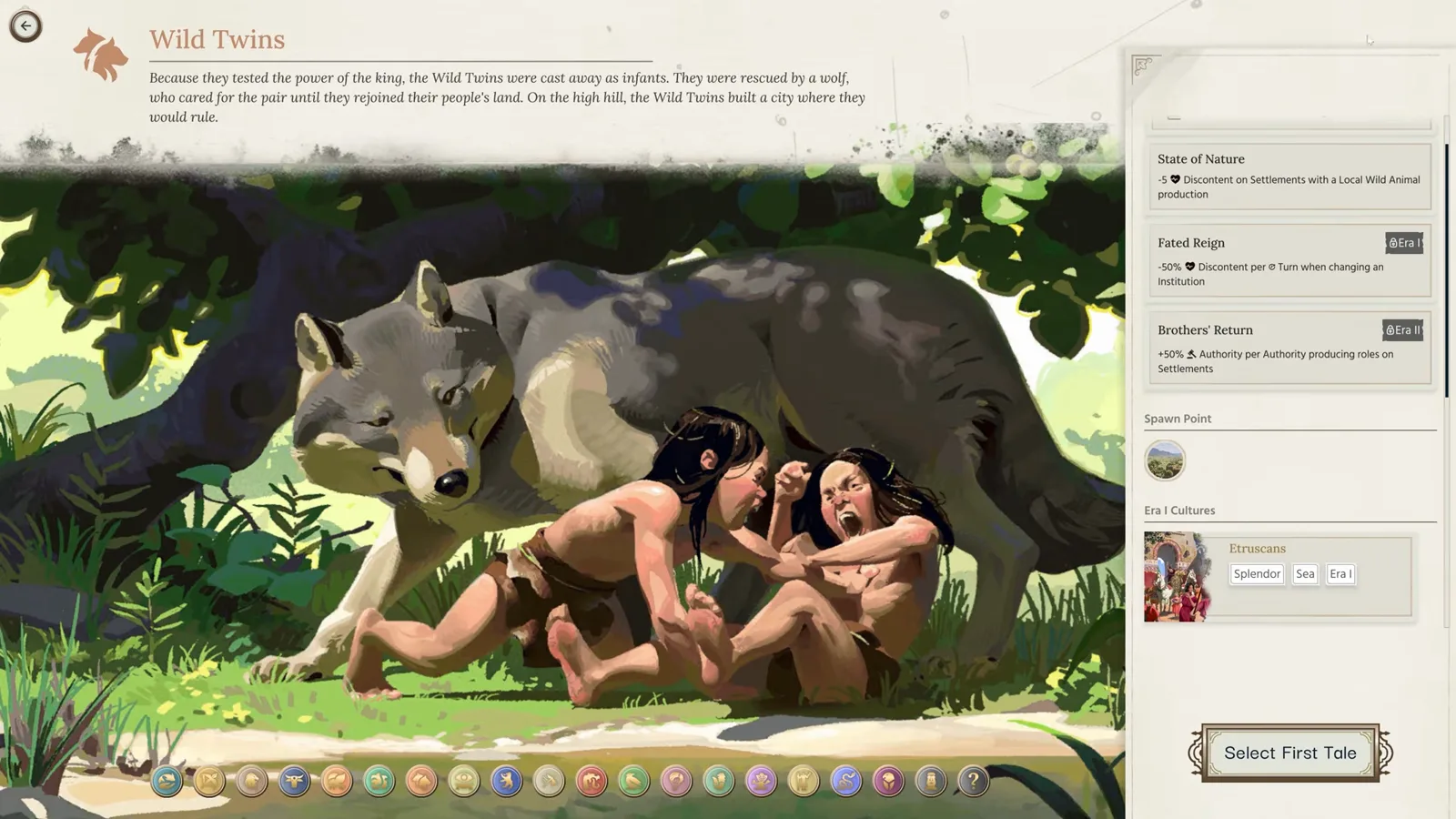
2. Wild Twins (Central Italian Peninsula — Pre-Roman / Italic)
- Location: Forested hills and river valleys of the Italian Peninsula.
- Founding Myth: “In a dark forest, twin infants are left to die. A wolf rescues the babies, setting off a chain of events that will birth a great kingdom.”
- Gameplay Mechanics: Inspired by the legendary founding myth of Romulus and Remus, positioning your fledgling tribe in timber-rich hills with direct Shared Land and Common History pathways toward the Etruscans and Rome.
Why Authentic Geography Makes Every Empire Play Differently
Because Historical Mode places your capital inside real-world ecological zones, your starting location immediately determines which of the 8 Biome Adaptations and neighbor networks you will encounter first:
- Nile & Mesopotamian River Starts: Surrounded by arid desert hexes (
Desert Biome), forcing early investment in Wells, Oasis Farming, and camel logistics once you expand beyond the fertile riverbanks. - Mediterranean & Aegean Starts: Defined by rocky peninsulas, temperate forests (
Forest Biome), and inland seas, encouraging early coastal harbors, timber extraction, and maritime Foreign Contact across the Mediterranean basin. - Northern & Sub-Arctic Starts: Bordering
TundraandPolarhexes where food resources decay rapidly without cold-weather preservation Customs and Long Winter adaptations.
Once your First Tale concludes and your Ancient Era capital is thriving, Historical Mode never railroads you into a scripted outcome. You are free to keep your founding culture across all six eras, conquer neighboring cradles of civilization, or blend customs from every empire you meet. To see how your empire develops after the opening myth, head over to our Culture Evolution, Crossroads & Customs Guide.
Official Walkthrough Videos

Related Chronicles
cultures
Humankind 2 Cultures List: All 70 Civilizations & 6 Eras
Complete list of confirmed Humankind 2 cultures across all 6 historical eras, including Ancient Egyptians, Mycenaeans, Carthaginians, Rome, Abbasids, and Thule.
guides
Humankind 2 vs Civilization 7: Key Differences Compared
Compare Humankind 2 vs Sid Meier Civilization VII across 8 core 4X pillars: 6 Eras vs 3 Ages, 70 playable cultures, optional Crossroads, and Earth biomes.
mechanics
Humankind 2 Biomes, Climate Change & Adaptations Guide
Complete guide to all 8 Biomes in Humankind 2: Desert, Forest, Tundra, and Polar Adaptation Trees, perishable food logistics, and climate change survival.
Was this chronicle helpful?
Thanks for your feedback!