
Humankind 2 Diplomacy, Trade & Warfare Mechanics Guide
Humankind 2 diplomacy, trade routes, and tactical border warfare: Rome vs Carthage, Persia choke points, Foreign Contact Customs, and unit command UI.
Frequently Asked Questions
How does Foreign Contact relate to diplomacy and trade in Humankind 2?
Why do perishable goods matter for Mediterranean trade in Humankind 2?
What unit actions appear on The Sophists panel near a Classical metropolis?
How should you use Standard Bearer and Spearmen stacks on Persian border wars?
When does diplomatic friction turn into full border warfare in Humankind 2?
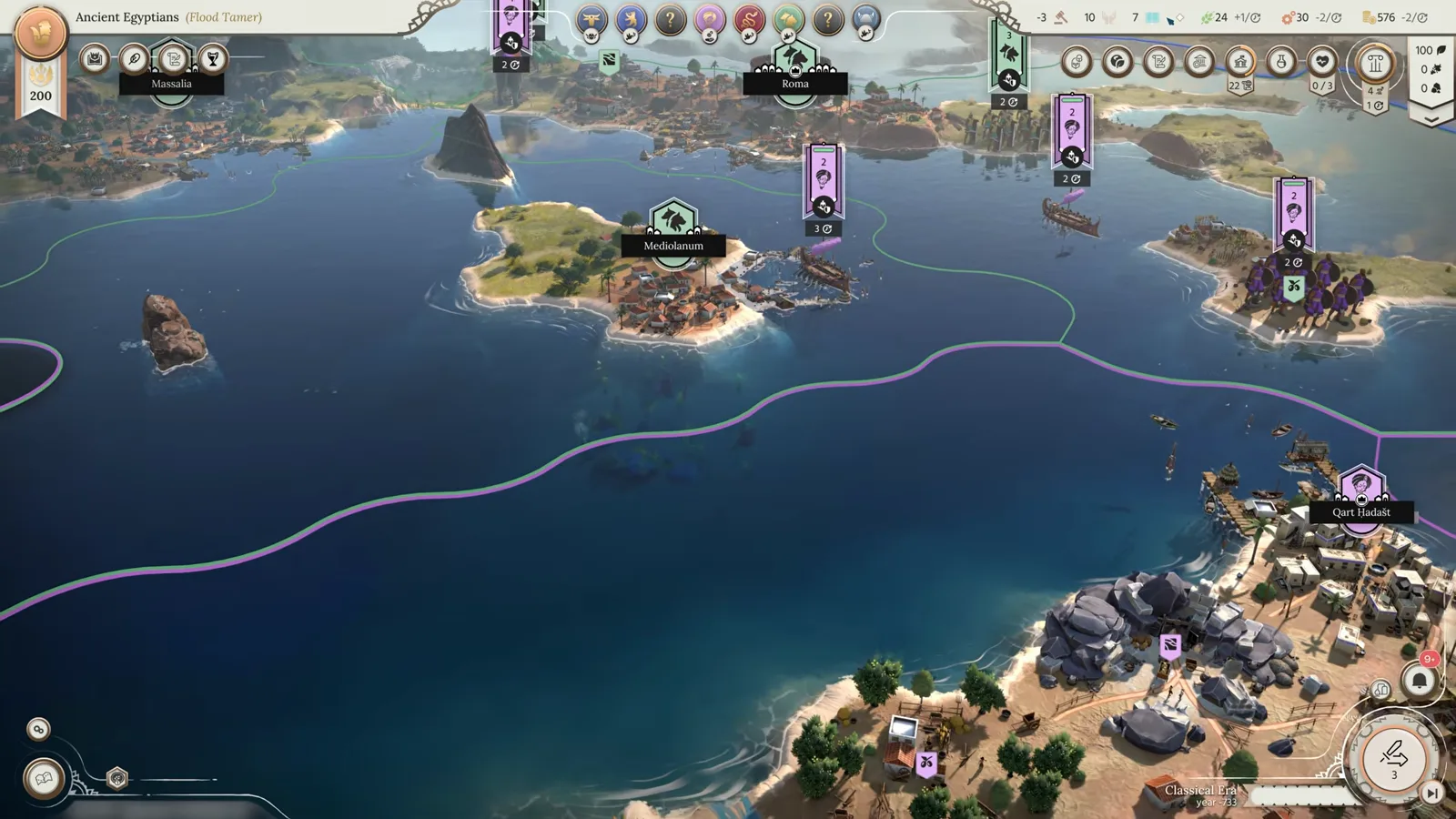
How Do Diplomacy, Trade, and Warfare Connect on the Humankind 2 Map?
Humankind 2 treats the map as a contract board: purple borders, harbors, and trade arrows are diplomatic signals, economic pipelines, and future battlefields. Pre-release builds show friction from denied access and stacked fleets before Rome (Republic) and Carthage escalate from tariffs to naval war.
This guide covers geopolitical rivalry, perishable logistics, and unit command once spears meet on cliffs. For neighbor culture unlocks, see Culture Evolution, Crossroads & Customs; for terrain modifiers, see Biomes & Climate Adaptations.
Why Does the Classical Mediterranean Become a Trade-and-War Superzone?
The Classical Era demo repeatedly frames the Mediterranean Sea not as decorative water, but as the spine of empire income. Rome and Carthage fight less over a single grass tile and more over maritime trade lanes—the dotted routes that connect specialized cities on islands, peninsulas, and coastal plains. Whoever secures harbors and escort fleets taxs every shipment of food, timber, and luxury goods crossing the basin.
Pre-release screenshots highlight purple border lines slicing through archipelagos, with transport ships shuttling goods even while relations are tense. That visual language matters: you can read impending war before the formal declaration, because rival fleets stack on the same lanes your merchants need. When conflict ignites, those lanes become blockade vectors—Carthage tries to starve Roman heartland cities while Rome retaliates by landing legions on African shores.
Historical flavor shows up in the Hannibal fantasy: elephants crossing the Alps threaten Rome from an unexpected vector. Overland detours can bypass naval supremacy if you accept attrition. Compare that pacing to Humankind 2 vs Civilization 7—diplomacy and geography gate when super-units reach the enemy capital.
Naval Transport vs Overland Caravans
| Route Type | Strength | Weakness in War |
|---|---|---|
| Short sea hops | Fast delivery of perishable food between coastal hubs | Vulnerable to galley raids and harbor sieges |
| Island chains | Lets smaller empires punch above weight via trade tax | Hard to defend without dispersed garrisons |
| Alpine crossings | Surprises enemies who stack only on coasts | High attrition; needs pre-staged depots |
How Do Perishable Resources and Foreign Contact Shape Peaceful Empires?
Trade in Humankind 2 is not an abstract +5 gold modifier. Perishable food and luxury goods lose practical value when routes are too long, too exposed, or interrupted by seasonal climate shifts detailed in Biomes & Climate Adaptations. A classic pre-release pattern shows a Forest city overflowing with grain feeding a Desert wonder capital that cannot farm locally at scale. Without a fast maritime leg—or a protected overland shortcut—that surplus rots while your desert metropolis starves during a drought event.
Foreign Contact is the diplomatic key that turns trade proximity into cultural leverage. Once you meet a neighbor at the map edge—through embassies, shared trade, or tense border coexistence—you register their civilization for the Era Crossroads and can spend Culture Points to borrow individual Customs instead of flipping your entire identity. The October 2026 gameplay overview famously showed adopting Thule Dogsled Hunters while remaining Egyptians; the same rule applies when Classical neighbors offer military or logistic Customs you need before a Carthage-style war.
Food surpluses also feed combat bonuses. The Ancient Egypt Flood Tamer guide explains how Nile stability becomes empire-wide Strength—directly relevant when your Standard Bearer stack reads +5 Combat Strength from Flood Tamer in the unit panel. Pair agricultural Customs with trade lanes and you are building a peace engine that still wins defensive wars.
What Does The Sophists Unit Panel Reveal About Specialist Command?
Not every unit on the border is a spearman. Pre-release UI spotlights The Sophists—a Knowledge specialist operating beside a Classical coastal metropolis with a Colosseum-scale monument. Opening the left panel shows core stats, an Abilities tab, and administrative buttons Replenish and Dismiss, the same family of controls military stacks use for upkeep management.
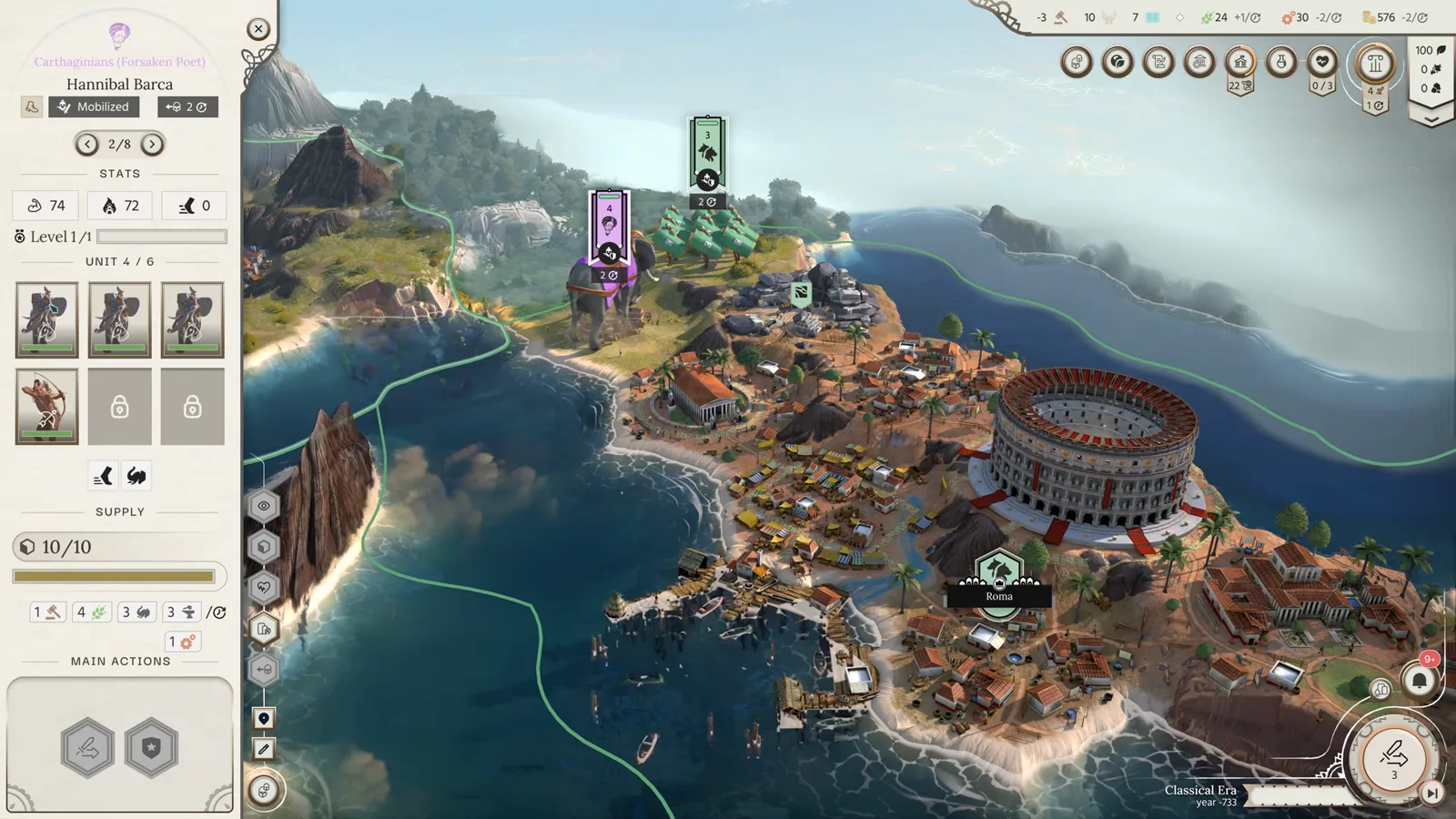
When to Keep Sophists on the Coast
Sophists excel when you are racing another empire for Culture Points or tech milestones that unlock better trade treaties. Park them in safe districts while caravans run; during war, Dismiss or redeploy them inland so you do not gift the enemy a high-value capture. Replenish suggests upkeep tied to stockpiled resources—mirror your trade plan so Knowledge units never idle during a blockade.
For a roster-wide view of which cultures bring similar specialists, browse the All 70 Playable Cultures hub, then narrow early-era picks with the Early Era Cultures Tier List.

Humankind 2 diplomacy trade and warfare gameplay overview
Where Do Coastal Garrisons Matter When Empires Touch?
Border tension is visible long before battle animations play. Pre-release frames show coastal territory where two empires meet: resource nodes sparkle on the seam, while garrison posture icons warn that whoever moves first loses trade income for dozens of turns.
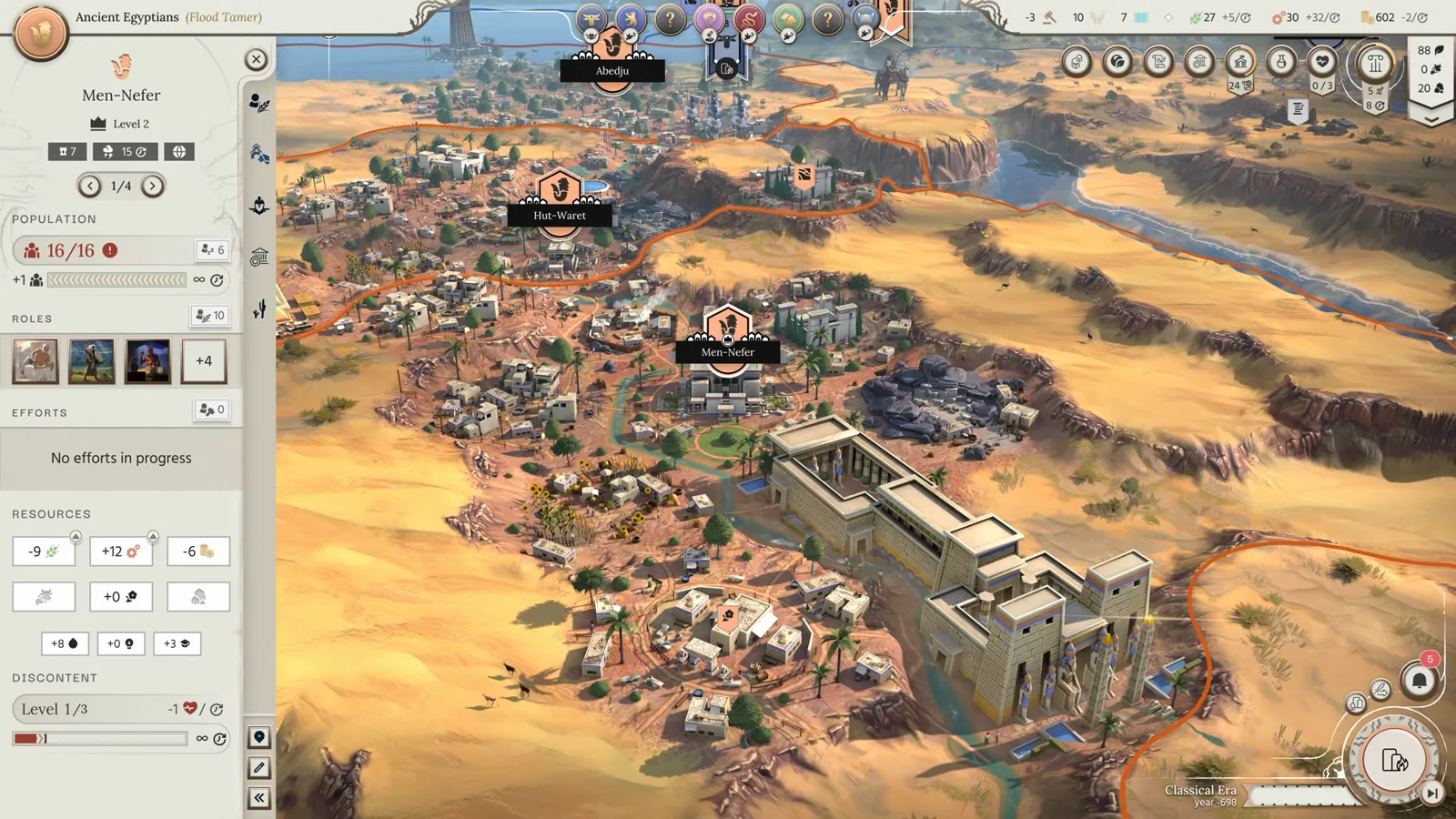
Garrison Logic on Choke-Point Tiles
Treat every shared coastal hex as a customs house plus fort. Occupying it lets you tax maritime trade; losing it forces merchants into longer, perishable-risk detours. Stack enough defenders to survive a first-wave naval landing, but leave mobile reserves one tile inland—Carthage-style raids aim to pin garrisons against the water where retreat is impossible.
Diplomatically, offering shared access to a neutral resource node can delay war while you finish borrowing a critical Custom through Culture Evolution, Crossroads & Customs. Militarily, it is the tile you scorch-earth last, because retaking a coastal garrison without naval support burns twice the manpower.
How Do Parsaans (Persian) Border Wars Use Elevation and Rivers?
While Rome and Carthage duel over sea lanes, pre-release footage shifts east to border warfare with Persia (Parsaans)—a land frontier defined by desert flats, mountain choke points, and river fords. Diplomatic friction here often starts as competition for oasis tiles and caravan tolls, then explodes when spearmen stack on opposite cliffs.
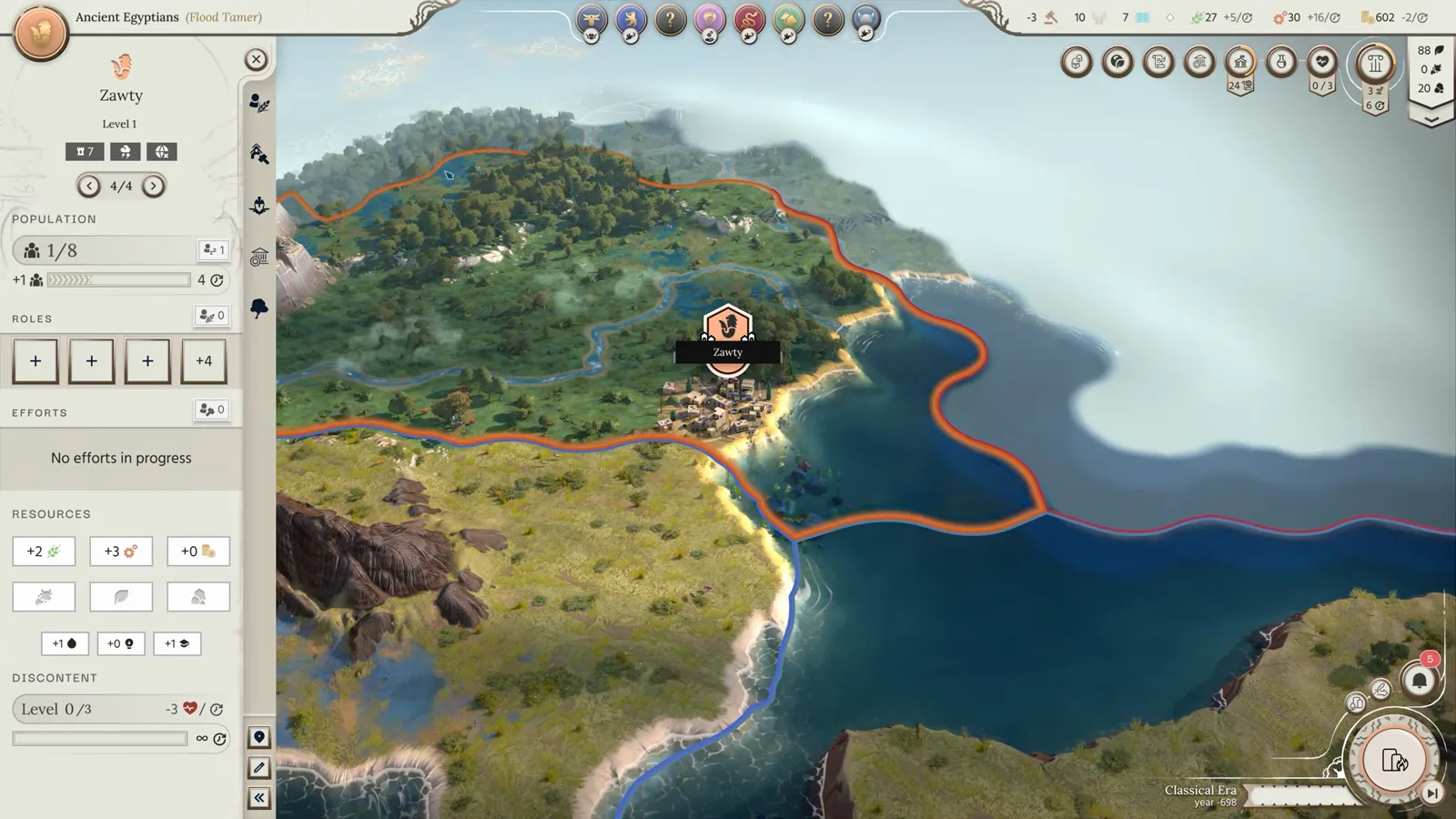
Tactical Checklist for Mountain-Desert Fronts
- Hold elevation — Combat Strength bonuses from height appear in the Standard Bearer summary; do not descend for a single resource node unless trade value exceeds troop loss.
- Force river crossings on your terms — Wait for dry-season river tiles (see biome notes in Biomes & Climate Adaptations) or fortify the near bank before enemy stacks arrive.
- Fortify cliffside settlements — Cities tucked against escarpments shrink the number of assault vectors, buying time for overland reinforcements when maritime trade is irrelevant.
- Sync traits with equipment — Panels show Spearmen with gear slots and optional +5 Strength from Wild Twins Feral Rage or food-trait synergies; plan Customs before the war starts, not mid-siege.
Parsaans wars punish empires that rely on a single biome. If your capital sits in fertile riverland but your army camps in desert attrition, rotate troops through friendly trade cities to Replenish before the cliff battles begin.
What Should You Monitor in Military Unit Panels During Total War?
Humankind 2’s unit UI is deliberately readable: select a Standard Bearer leading Spearmen, and the panel surfaces Health, Combat Strength, trait-derived bonuses, equipment slots, and garrison posture toggles. These are not cosmetic—they communicate whether a stack is defending trade infrastructure or marching to relieve a coastal siege.
During Rome–Carthage naval phases, detach small garrison stacks while main fleets contest lanes. During Persian phases, merge Standard Bearer auras with cliff forts so +5 Strength from Flood Tamer or Feral Rage peaks when the enemy fords a river. Dismiss The Sophists only after their Knowledge output is spent.
How Does This Loop Fit Your Long-Term Strategy?
Winning campaigns rotate merchant peace (short perishable routes), diplomatic teching (Foreign Contact → borrowed Customs), and limited war (choke points only). Rome vs Carthage teaches blockades; Persia teaches elevation; Egypt-style Flood Tamer play converts grain into Combat Strength before declarations.
Use diplomacy to delay wars until Customs align, trade to survive climate shocks, and warfare to secure lanes permanently. The purple border lines forecast the next treaty or battle before the AI acts.
Related Chronicles
cultures
Humankind 2 Cultures Tier List: Best Early Civilizations
Rank Humankind 2 early-era cultures for 2027 pre-release: S-tier Egyptians, Romans, Carthage, plus Persia, Thule, and steppe picks by Customs Trees.
mechanics
Humankind 2 Sled Dogs Guide: Thule Customs & Polar Units
Adopt Thule Dogsled Hunters in Humankind 2 via Foreign Contact, unlock Polar Adaptations, and deploy sled-dog scouts without abandoning Egyptian culture.
guides
Humankind 2 vs Civilization 7: Key Differences Compared
Compare Humankind 2 vs Sid Meier Civilization VII across 8 core 4X pillars: 6 Eras vs 3 Ages, 70 playable cultures, optional Crossroads, and Earth biomes.
Was this chronicle helpful?
Thanks for your feedback!