
Humankind 2 Cultures List: All 70 Civilizations & 6 Eras
Complete list of confirmed Humankind 2 cultures across all 6 historical eras, including Ancient Egyptians, Mycenaeans, Carthaginians, Rome, Abbasids, and Thule.
Frequently Asked Questions
How many playable cultures are in Humankind 2 at launch?
Do you have to switch cultures every era in Humankind 2?
How do you unlock new cultures at the Era Crossroads?
Can you use another culture's units or abilities without becoming them?
Which Ancient Era cultures are confirmed in Humankind 2 so far?
How Many Cultures and Eras Are in Humankind 2?
In the October 15, 2026 Gameplay Overview, Game Director Benoît Hembert confirmed that Humankind 2 will launch with 70 playable cultures distributed across 6 historical eras. That represents a 16.7% roster expansion over the original Humankind (which launched with 60 base cultures across 6 eras in 2021) and incorporates minor, regional, and specialized cultures directly into the cultural evolution web.
Even more importantly, cultures in Humankind 2 are no longer treated as disposable stat-sticks that you swap out every 30 turns. Every civilization now possesses its own multi-node Cultural Progression Tree of Customs and a capstone Legacy Trait, allowing you to either evolve organically through related civilizations or champion a single culture from the dawn of history into the modern age. For full details on the new era transition rules, read our Culture Evolution, Crossroads & Customs Guide.
Which Playable Cultures Are Confirmed So Far?
Through frame-by-frame analysis of the official Steam reveal and the October 15 Gameplay Overview walkthrough (O4ZTZafqFOw), 12 specific cultures and cultural lineages have already been shown in UI menus, era transition screens, and biome adaptation panels:
| Confirmed Culture | Historical Era Tier | Region / Biome Affinity | Confirmed Customs, Units & Gameplay Notes |
|---|---|---|---|
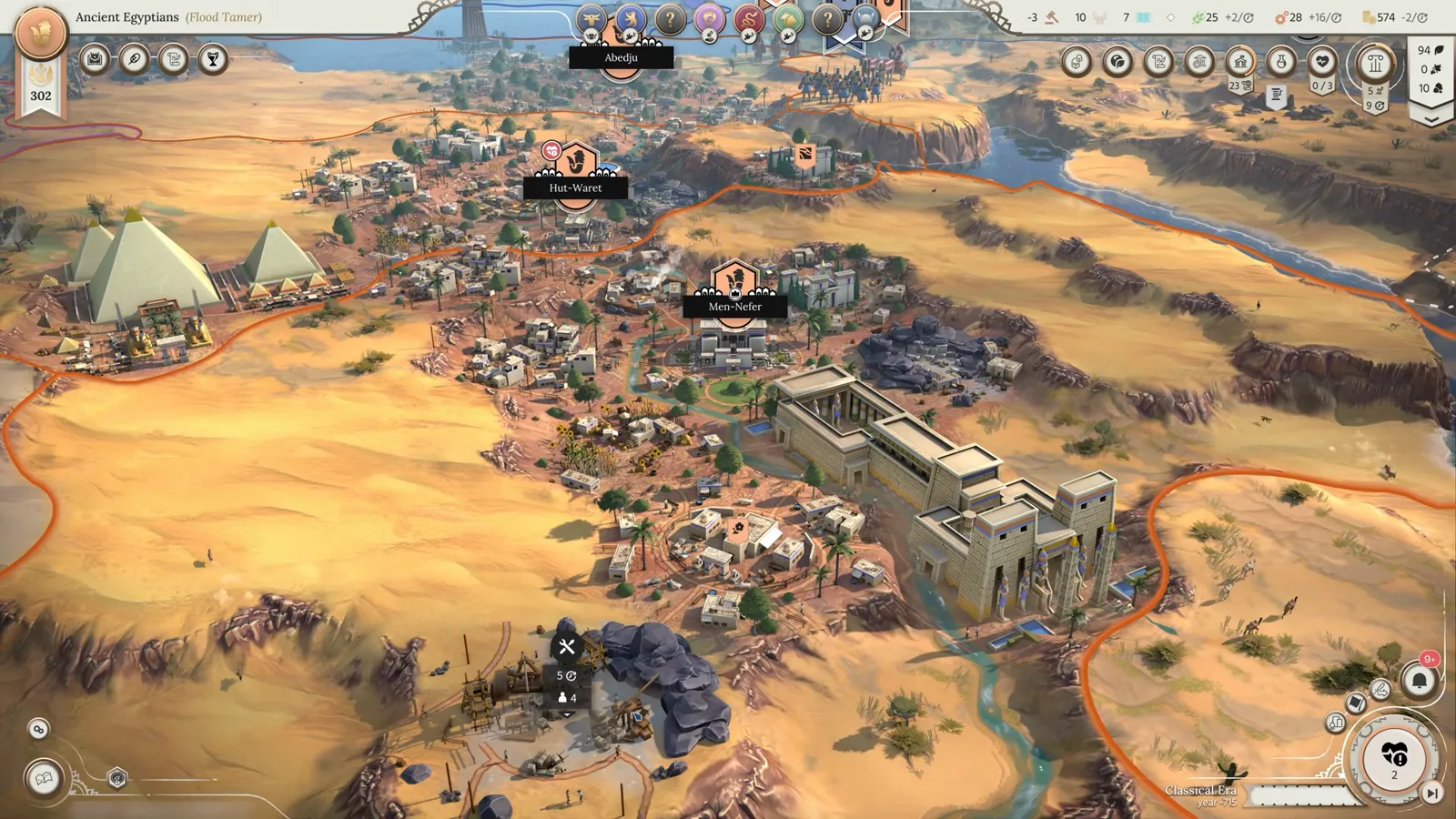
| Ancient Egyptians | Era I (Ancient) | Nile River Delta / Desert | Starts via Flood Tamer First Tale; Customs include River Transport, Hieroglyphics, Priestly Class, Pharaoh’s Authority, and Viziers |
| Mycenaeans | Era I (Ancient) | Aegean / Coastal Hills | Bronze Age martial civilization; featured alongside early Mediterranean coastal settlements and citadel fortifications |
| Saqqaq | Era I (Ancient) | Arctic / Greenland Polar | Paleo-Eskimo polar culture; specialized in extreme cold survival, sea-mammal hunting, and Arctic coastal navigation |
| Etruscans | Era I–II (Ancient/Classical) | Italian Peninsula / Hills | Pre-Roman Italic civilization linked via Shared Land and Common History to Mediterranean Classical powers |
| Scythians | Era I–II (Ancient/Classical) | Eurasian Steppe / Plains | Nomadic horse-archer culture showcasing open-hex cavalry maneuvers and mobile steppe warfare |
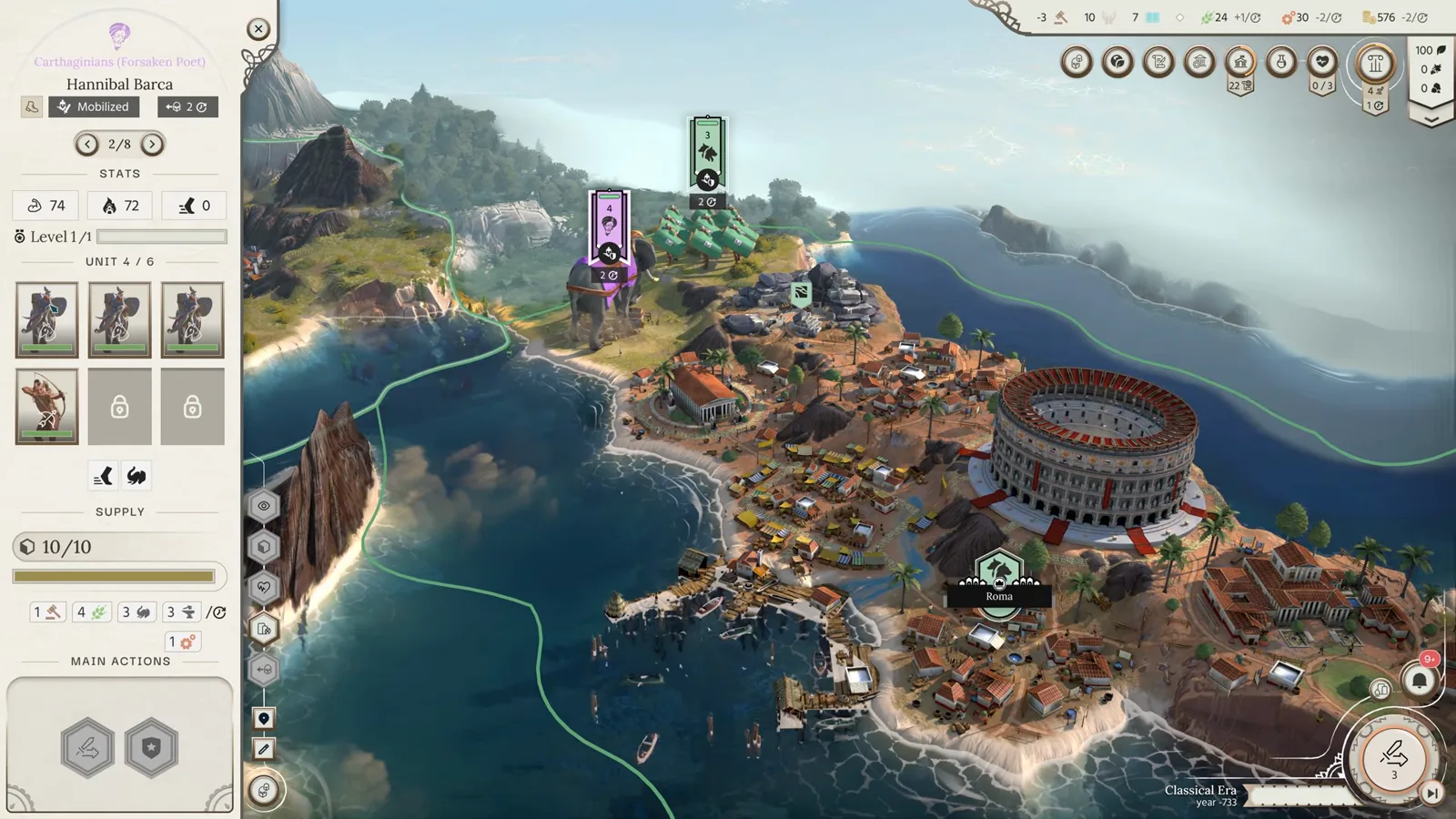
| Carthaginians | Era II (Classical) | North Africa / Maritime | Revealed on the Era Crossroads screen as a direct evolution option for Ancient Egypt via Shared Land |
| Rome (Romans) | Era II (Classical) | Mediterranean / Temperate | Featured in Classical Era artwork triptychs, legionary warfare, and grand aqueduct/amphitheater urban districts |
| Persia (Achaemenid) | Era II (Classical) | Near East / Arid Plateau | Classical imperial powerhouse connected to Mesopotamian and Egyptian Foreign Contact networks |
| Byzantines | Era III (Medieval) | Eastern Mediterranean | Confirmed on the Crossroads transition UI as a medieval continuation path for Eastern Mediterranean empires |
| Abbasids | Era III (Medieval) | Middle East / Desert | Shown directly on the Era Crossroads selection panel as a medieval evolution path from Ancient Egypt |
| Parsaans | Era III (Medieval) | Persian Plateau / Trade | Featured alongside the Abbasids and Byzantines in the Crossroads era evolution interface |
| Thule | Era III (Medieval) | Greenland / Polar Biome | Ancestors of the modern Inuit; neighbors can adopt their Dogsled Hunters Custom for Arctic exploration and combat |
Deep Dive: How the Ancient Egyptians Play in Era I
The October 15 walkthrough used Ancient Egypt as its primary showcase civilization, giving us a complete look at how a single culture operates from Turn 1 through the Classical and Medieval Crossroads.
1. Founding Myth (“First Tale”)
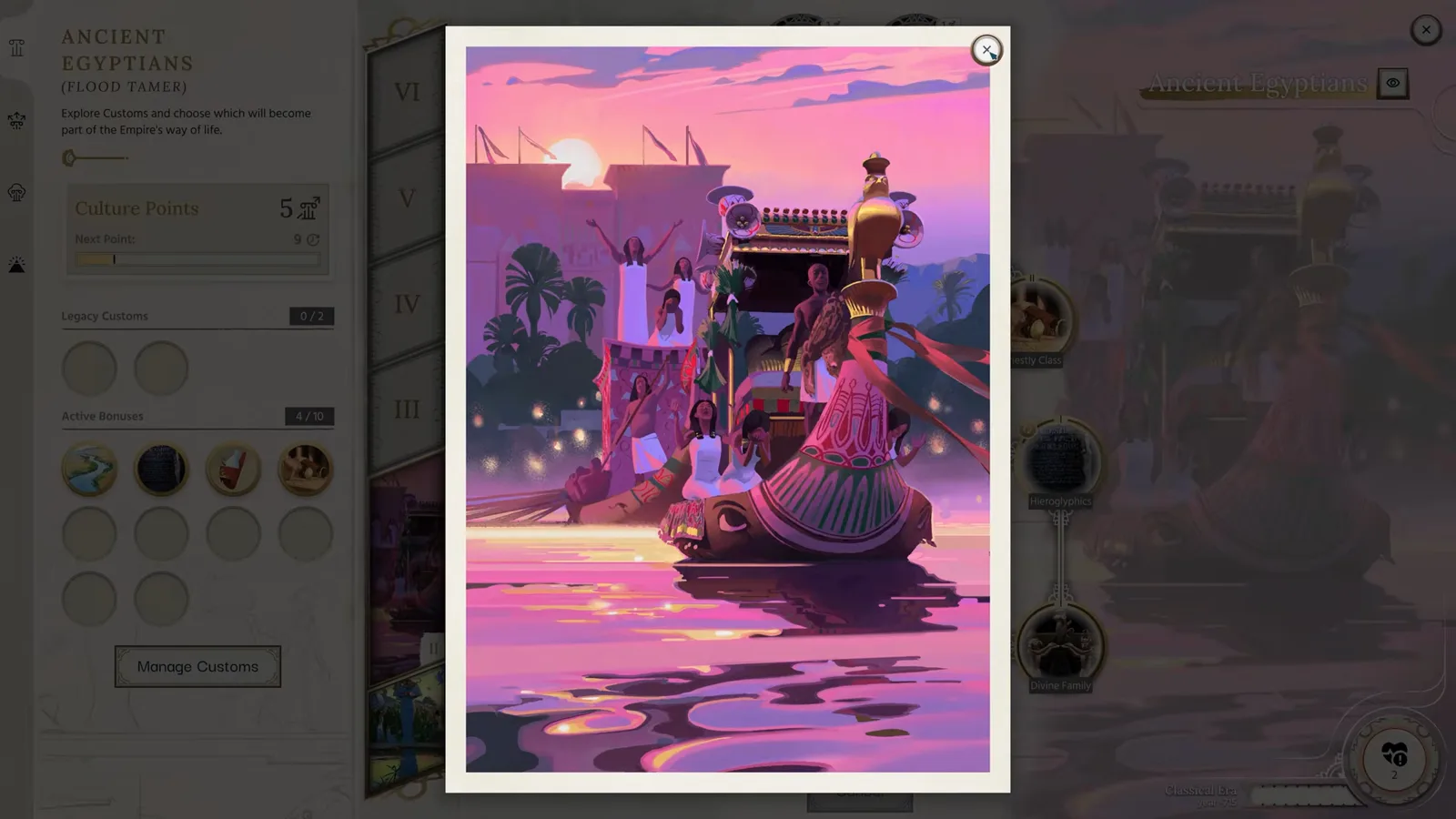
When starting in Historical Mode, choosing the Nile Valley spawn triggers the Flood Tamer First Tale:
- Narrative Premise: “Along the banks of the Nile, your people are struggling to survive destructive seasonal floods and violent hippos. With help from the gods, you will tame the waters and lay the foundations for the Pharaohs of Ancient Egypt.”
- Immediate Gameplay Impact: Grants early narrative quests tied to Nile floodplain mastery before you even place your first administrative dynasty.
2. Ancient Egyptian Customs & Progression Tree
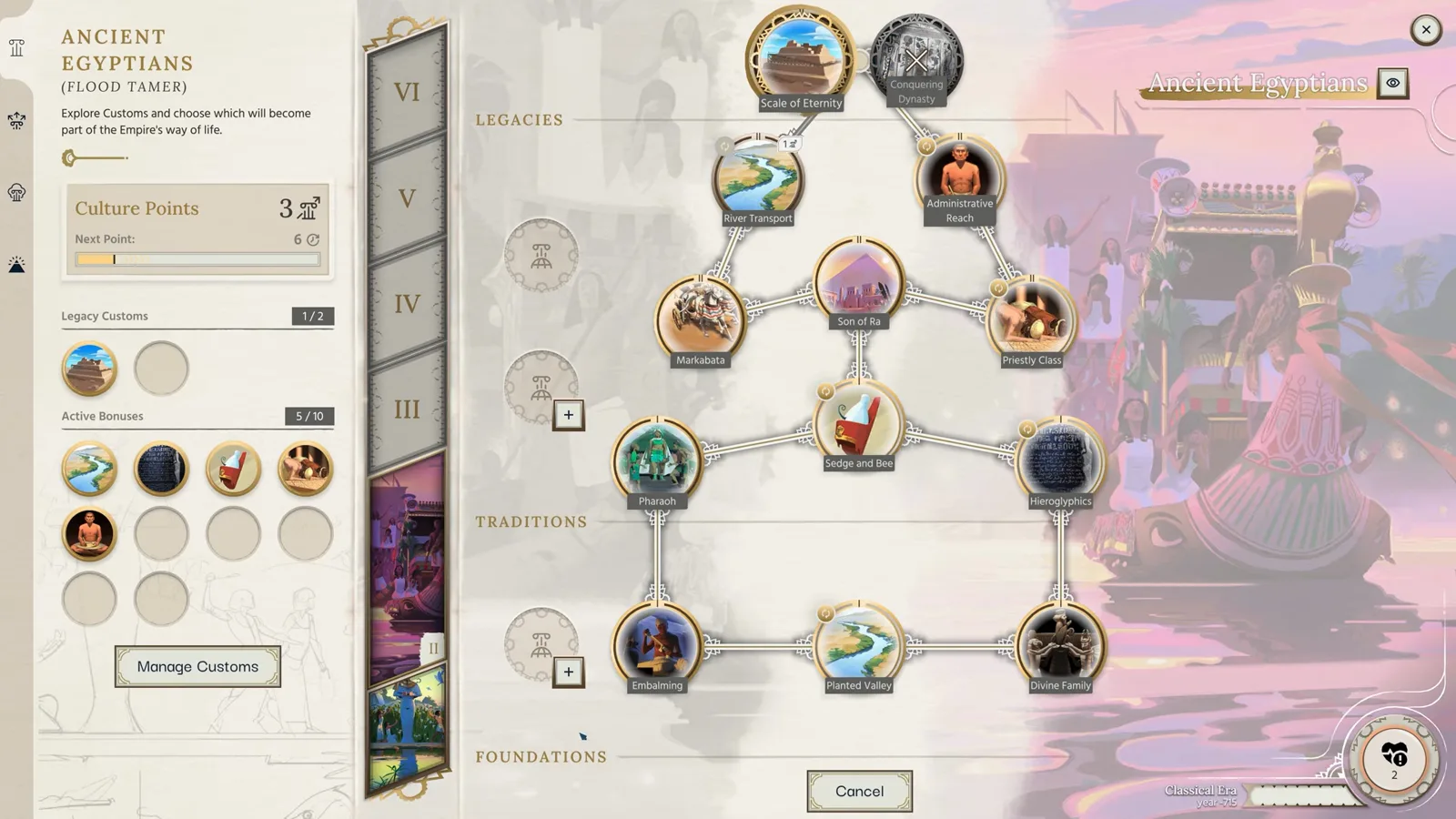
Instead of receiving a static passive bonus on Turn 1, Ancient Egypt unlocks a five-step Cultural Progression Tree fueled by Culture Points:
- River Transport: Accelerates unit movement and logistics along navigable river hexes and floodplains.
- Hieroglyphics: Boosts administrative record-keeping, knowledge generation, and cultural influence radiation.
- Priestly Class: Strengthens temple districts, state religion stability, and ceremonial authority.
- Pharaoh’s Authority & Viziers: High-tier governance Customs shown in the Manage Customs interface that unlock Egypt’s permanent Legacy Trait once all five nodes are completed.
How Does Culture Switching Work at the Crossroads?
When your empire accumulates enough progress to enter a new historical epoch, you reach the Crossroads screen. Unlike Humankind 1’s free-for-all race where any player could instantly turn the Harappans into the Celts and then the Aztecs with zero geographical logic, Humankind 2 grounds cultural transitions in three authentic historical connectors:
- Stay Your Current Culture (Persistence): You can choose to Remain Ancient Egyptians (or your current civilization) into the next era. Because every culture has a multi-node Customs tree and can absorb foreign Customs from neighbors, staying Egyptian remains mechanically competitive and narratively cohesive.
- Common History: Unlock successor civilizations that historically descended from or shared a cultural continuum with your current people.
- Shared Land: Transition into cultures whose historical heartland overlaps with the territories and biomes your empire currently controls on the Earth map (for example, an Egyptian empire controlling the North African coast unlocking the Carthaginians or Abbasids).
- Foreign Contact: Evolve into—or borrow individual Customs from—civilizations your scouts, merchants, and armies have actively interacted with along your borders.
How Does the 6-Era Structure Compare to Other 4X Games?
Players debating between Amplitude’s upcoming sequel and Firaxis’s latest entry often focus on era pacing. While Civilization VII compressed history into 3 broad Ages with mandatory civilization resets at each transition, Humankind 2 retains a granular 6-Era timeline while making culture changes 100% optional and historically gated.
Check out our full Humankind 2 vs Civilization 7 Comparison and our Release Date & Gameplay Overview for a side-by-side breakdown of how all 70 cultures fit into the 2027 launch package.
Related Chronicles
guides
Humankind 2 vs Civilization 7: Key Differences Compared
Compare Humankind 2 vs Sid Meier Civilization VII across 8 core 4X pillars: 6 Eras vs 3 Ages, 70 playable cultures, optional Crossroads, and Earth biomes.
mechanics
Humankind 2 Biomes, Climate Change & Adaptations Guide
Complete guide to all 8 Biomes in Humankind 2: Desert, Forest, Tundra, and Polar Adaptation Trees, perishable food logistics, and climate change survival.
mechanics
Humankind 2 Culture Evolution, Crossroads & Customs Guide
How do Culture Evolution, the Era Crossroads, and Customs work in Humankind 2? Master Culture Points, Legacy Traits, Common History, and neighbor Customs.
Was this chronicle helpful?
Thanks for your feedback!